



Tenerife’s Agricultural Heritage Preserved in Seed Vaults
Tenerife is safeguarding its agricultural legacy, stored in the protected surroundings of the Botanical Garden in Puerto de la Cruz. The garden houses thousands of seeds and plant samples, securing a vital part of the island’s history. Here, amid reinforced concrete walls, species have been preserved from natural disasters, ensuring they continue to flourish for generations.
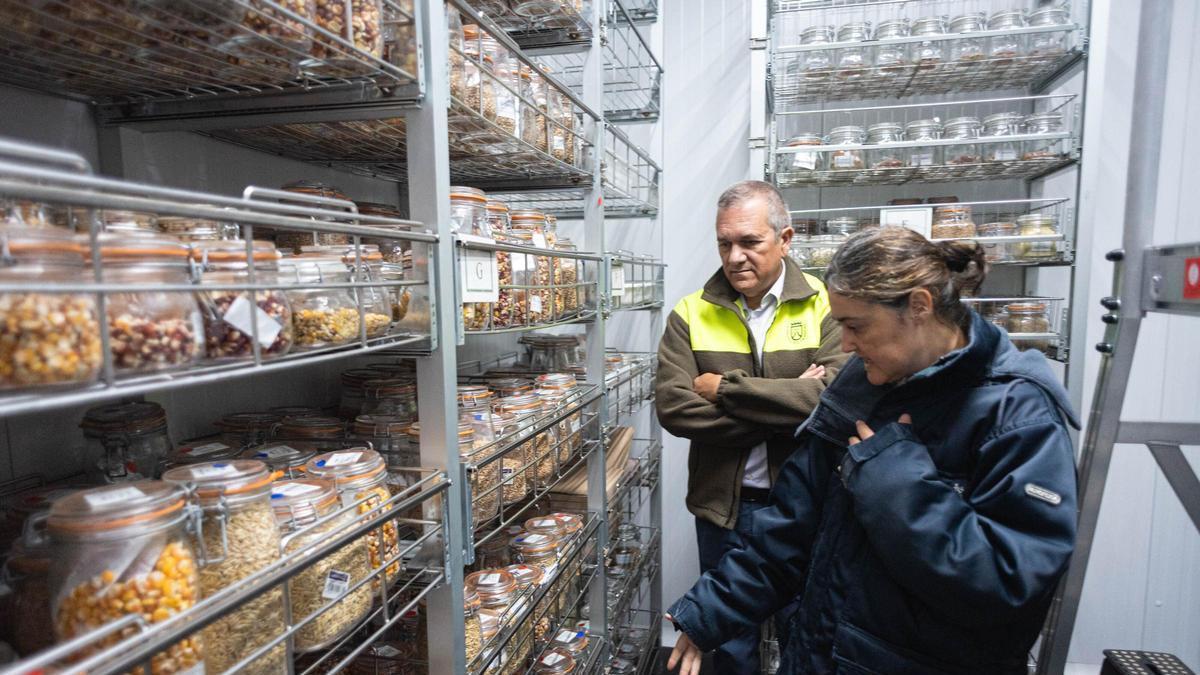
Within the garden’s basement, two chambers and several refrigerators maintain ancient cereals, traditional potatoes, legumes, vegetables, fruit trees, vines, and tobacco plants—an invaluable agricultural heritage that could withstand even catastrophic events.
In addition to local conservation efforts, some of Tenerife’s plant varieties, mainly cereals, legumes, and lettuces, are also housed in the Global Seed Vault in Svalbard, Norway. This vast underground facility safeguards seeds from over a million cultivated plants worldwide, representing a global backup for food diversity.
A significant collection of over 3,500 plant samples remains in Tenerife, alongside the Botanical Garden, managed by the Centre for Agricultural Biodiversity Conservation (CCBAT). Visiting the CCBAT reveals a rich tapestry of agricultural evolution on the island, tied to its first inhabitants, the Guanches, who brought seeds from North Africa over 2,000 years ago.
The CCBAT lab houses various seeds and plant materials intricately documented on posters. It is a fortress not only for local foods but also for research, with ongoing studies revealing high nutritional values in traditional crops compared to those from intensive agriculture.
The CCBAT played a pivotal role when it was established in 2003 by the government of Tenerife to protect the island’s agricultural diversity. Under the leadership of Domingo Ríos, the centre has since expanded its operations and relocation to the Botanical Garden in 2013, where essential specimens are stored at optimal conditions as per the Food and Agriculture Organisation’s guidelines.
Maintaining these collections involves strict protocols to ensure preservation, as any changes in temperature or humidity can jeopardise the seeds. The CCBAT also provides invaluable support to local farmers, offering materials and guidance for pest management and climate resilience.
Efforts to preserve traditional foods continue, with recent discoveries like the burriango—a unique variety of squash. The CCBAT seeks to revive a long-lost onion variety from La Gomera, showing their dedication to rescuing local biodiversity.
The centre’s outreach efforts educate the public about the significance of traditional foods and their historical context. By highlighting Tenerife’s agricultural past, they aim to ensure these varieties and the knowledge surrounding them are not forgotten. It’s about preserving both a piece of history and the wisdom that has been passed down through generations.