


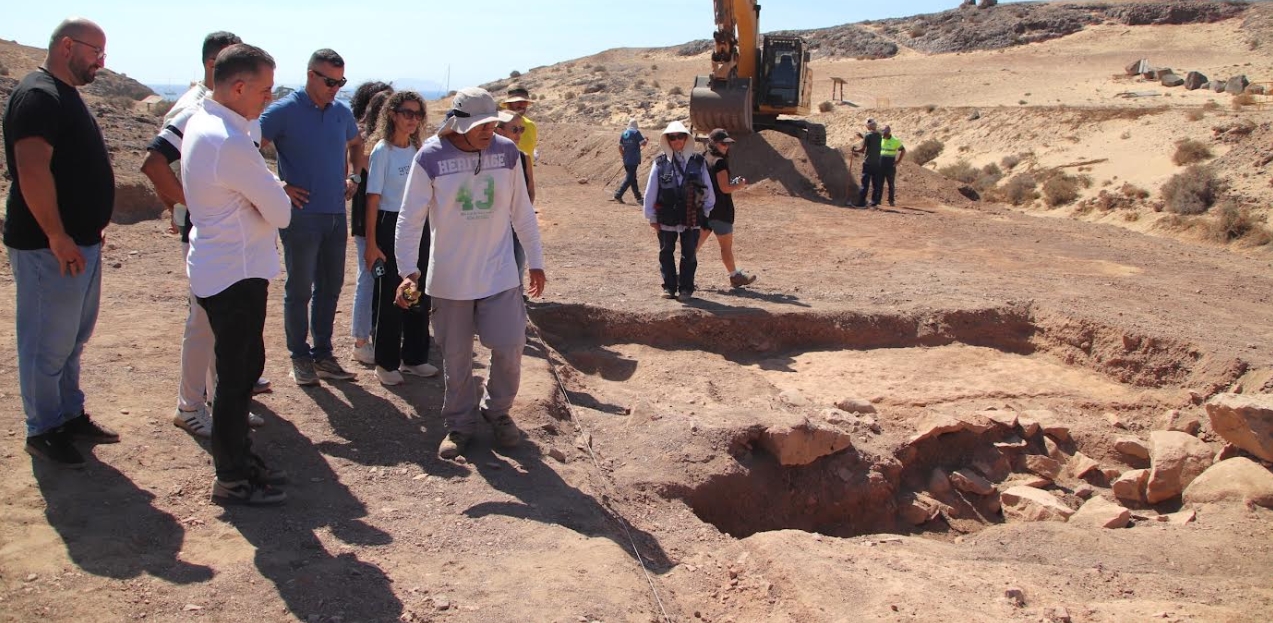
Archaeological excavations at San Marcial del Rubicón in southern Lanzarote have uncovered two new wells, adding to the understanding of the first European city in the Canary Islands, established by a Norman expedition in the 15th century. This is the seventh phase of the archaeological intervention project, which aims to shed light on the water management and social organisation of this historic settlement.
The team, led by archaeologists María del Cristo González, Esther Chávez, Nona Perera, Luis Alejandro García, and Miguel Ángel Hervás, has not yet confirmed if the newly discovered wells date back to the city’s founding. Further excavations will be needed to establish their timeline.
San Marcial del Rubicón is recognised as the first permanent frontier city in the central Atlantic, where indigenous people coexisted with settlers from abroad. This research is funded by the Government of the Canary Islands, two public universities in the region, and the Yaiza Town Hall.
Mayor Óscar Noda highlighted the importance of the research over the past seven campaigns, aiming to develop the site into an archaeological park or museum that promotes the history and heritage of the Canaries. Meanwhile, heritage councillor Silvia Santana noted the contribution of local technical resources, specifically machinery to remove large amounts of soil obstructing the site.
With the latest findings, there are now six confirmed wells at San Marcial del Rubicón, along with an ongoing investigation into another water management structure. Previous excavations have uncovered ceramics, coins, domestic habitats, fortifications, a cemetery, and a lime kiln. This year’s campaign also revealed a space potentially related to the kiln and another area, known as ‘La Plaza’, which had previously been explored by other researchers. The goal remains to identify various spaces that composed the first city in the Canary Islands.


