


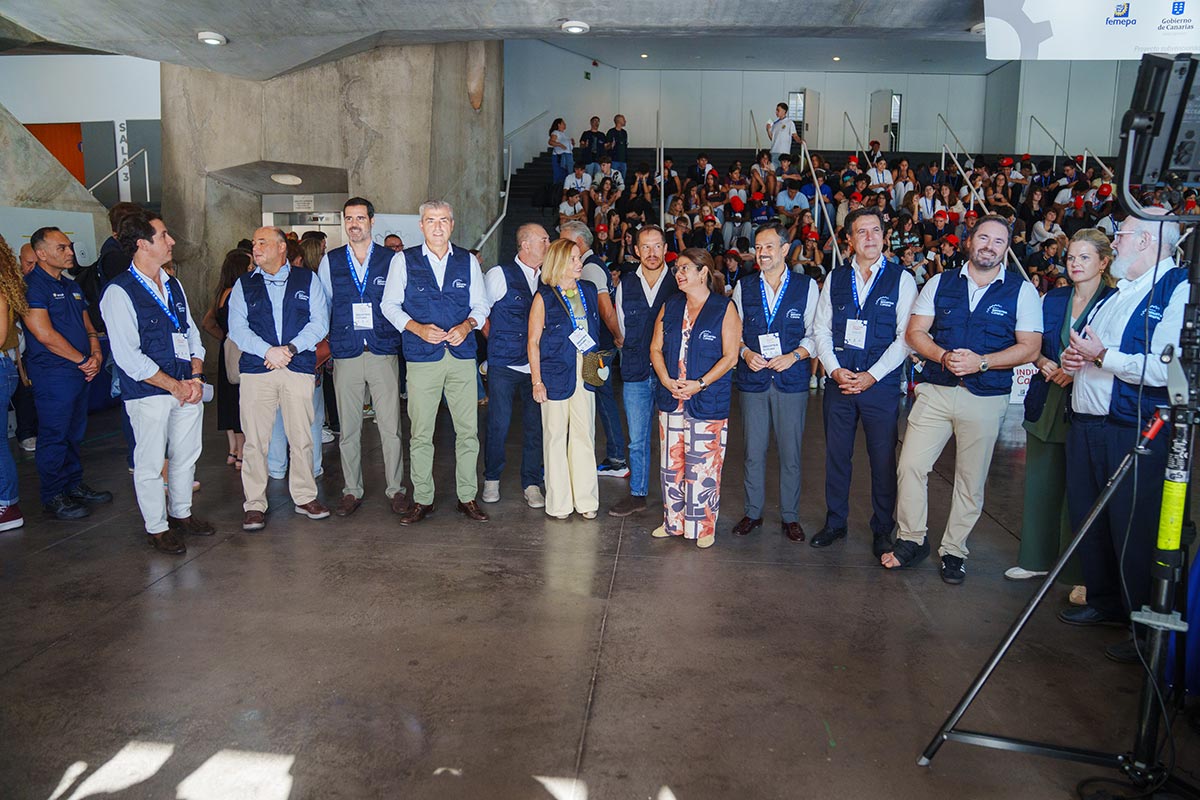
The Tenerife Fairgrounds hosted the Day of the Canary Industry on 7 October, organised by Femete and Femepa as part of the “Apuesta por la Industria Legal” initiative. Nearly 250 Year 10 students from schools across both Canary provinces participated. This event featured a series of challenges, demonstrations, and hands-on experiences, aiming to connect students with vocational opportunities in the industrial sector.
Juan Antonio Jiménez Arranz, president of Femete, described the day as a significant success. He noted, “The balance is especially positive and hopeful. Students engaged with real industry scenarios, letting them see beyond abstract concepts and understand the importance of skilled trades.”
The format encouraged active participation rather than passive attendance, with students working in small teams. “They tackled challenges, used materials, interacted with professionals, and discovered fields such as automation and telecommunications,” explained Jiménez Arranz. “By fostering curiosity and broader perspectives about their career paths, we opened a window at a crucial point in their education.”
Bringing together students from different islands highlighted the region’s shared industrial challenges. “Industrial professions offer opportunities across the archipelago, and this event reinforced the idea that Femete and Femepa closely collaborate to communicate the value of these trades to society,” he added.
Targeting Year 10 students was deliberate, as they are starting to make significant educational choices. Jiménez Arranz stated, “We wanted to present options before critical decisions are made. Many industrial jobs remain underappreciated despite their relevance.”
This hands-on approach proved more effective than traditional lectures. “Learning by doing creates a deeper understanding,” he noted. Participants saw how multiple aspects of industry contribute to daily life, reinforcing the necessity for qualified professionals.
Commenting on the opening remarks, Jiménez Arranz said, “Industry often goes unnoticed, but when it stops, everything halts. We need to highlight the professionals behind essential services like electricity and transport.”
While it’s too early to gauge if new industrial callings will emerge from the event, he acknowledged the students left with greater awareness and options. “The immediate success was bringing industry closer to youth before they decide their next steps,” he concluded.
The Day of the Canary Industry formed part of the Apuesta por la Industria Legal project, aimed at giving visibility to industrial professions while promoting compliance and skilled workforce training. The initiative seeks to combat the shadow economy by connecting young people with real opportunities in a responsible economic model.
Ultimately, Jiménez Arranz hopes students will take away the message that industry is a viable part of their life plans. “Curiosity is key; we need the youth to explore possibilities and realise that technical and technological roles are crucial for the future of the Canary Islands,” he said.


