


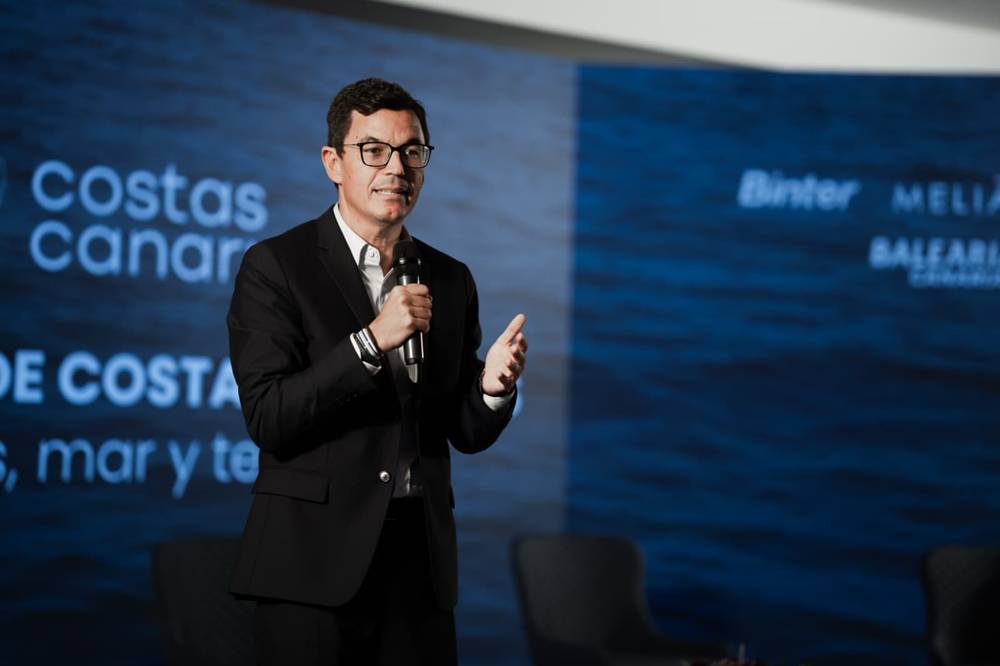
The Canary Islands Government has revealed a draft of the Coastal Law during the First Congress on Canarian Coasts, held on 15 and 16 October in Gran Canaria.
The proposal aims to tailor coastal regulations to the unique characteristics of the archipelago, addressing planning, beach management, and coastal protection while considering the environmental specifics of the islands.
Pablo Rodríguez, the Minister for Public Works, Housing, and Mobility, emphasised the need for greater autonomy and tools for managing the islands’ coast. He highlighted the historical bond between Canarians and the sea, advocating for a balance between protection and the safety of people living near the coast.
“Canarians have lived along our coastline for centuries, coexisting with and caring for it,” Rodríguez stated, stressing the importance of progressing towards a management approach that safeguards the coast while allowing for interaction with it.
He also noted the establishment of the General Directorate for Coasts and Maritime Space Management during this term, arguing that the transfer of competencies has been “insufficient” to meet the archipelago’s needs. Rodríguez pointed out that other autonomous regions have more resources for managing their coasts, insisting that the Canary Islands must develop a framework that reflects its territorial reality.
Antonio Acosta, the General Director of Coasts, praised the congress as a platform for sharing experiences between regions to tackle common coastal management challenges. He highlighted the participation of around 200 attendees and stated that the draft’s presentation marks the beginning of a participatory process regarding the future regulation.
Francisco Villar, a professor of Administrative Law at the University of La Laguna, presented the draft, which examines the coast from both terrestrial and maritime perspectives. He underscored the need to adapt existing regulations to the islands’ unique circumstances and clarify concepts that have caused interpretative difficulties.
In terms of planning, Villar explained that the Canary Islands already possess tools to assess coastal areas based on their value and protection needs. The proposal seeks to enhance these tools where necessary.
The draft includes principles such as sustainable development, coastal integration, and water conservation, as well as mechanisms for participation and coordination, including the Coastal Forum.
Beach management is a particular focus of the draft, relating to the classification of coastal sections, public spaces, compatible uses, and beach maintenance. Villar also pointed out the need to appropriately address the unique features of the Canaries, including natural pools, which require specific regulations.
Additional topics in the draft involve protective easements, access to the sea, and pedestrian coast access, with Villar stressing the importance of considering accessibility and individual rights.
Traditional coastal settlements are also addressed, with the draft proposing to recognise their historical, fishing, maritime, and social values, and to explore ways to enhance essential services while preserving their characteristics.
The congress continued with presentations on regulatory experiences from Catalonia and debates on management models from other regions, with participants from various autonomous governments discussing their coastal management experiences and new shifts in competencies.


