


Fuerteventura’s Successful Invasive Species Control Project
The Fuerteventura Council has successfully concluded a year-long initiative aimed at controlling and eliminating invasive plant species, primarily Calotropis procera, reed species, and bulrush, which pose a significant threat to local ecosystems.
Since December 2025, the project involved identifying, managing, removing, and monitoring these invasive species, alongside environmental restoration and waste management strategies to mitigate regrowth. Efforts were concentrated in areas with high Calotropis prevalence, such as the edges of roads and paths, dry reservoirs, and abandoned agricultural land, with priority given to regions around Pozo Negro, extending to other municipalities including Antigua, Tuineje, and Pájara.
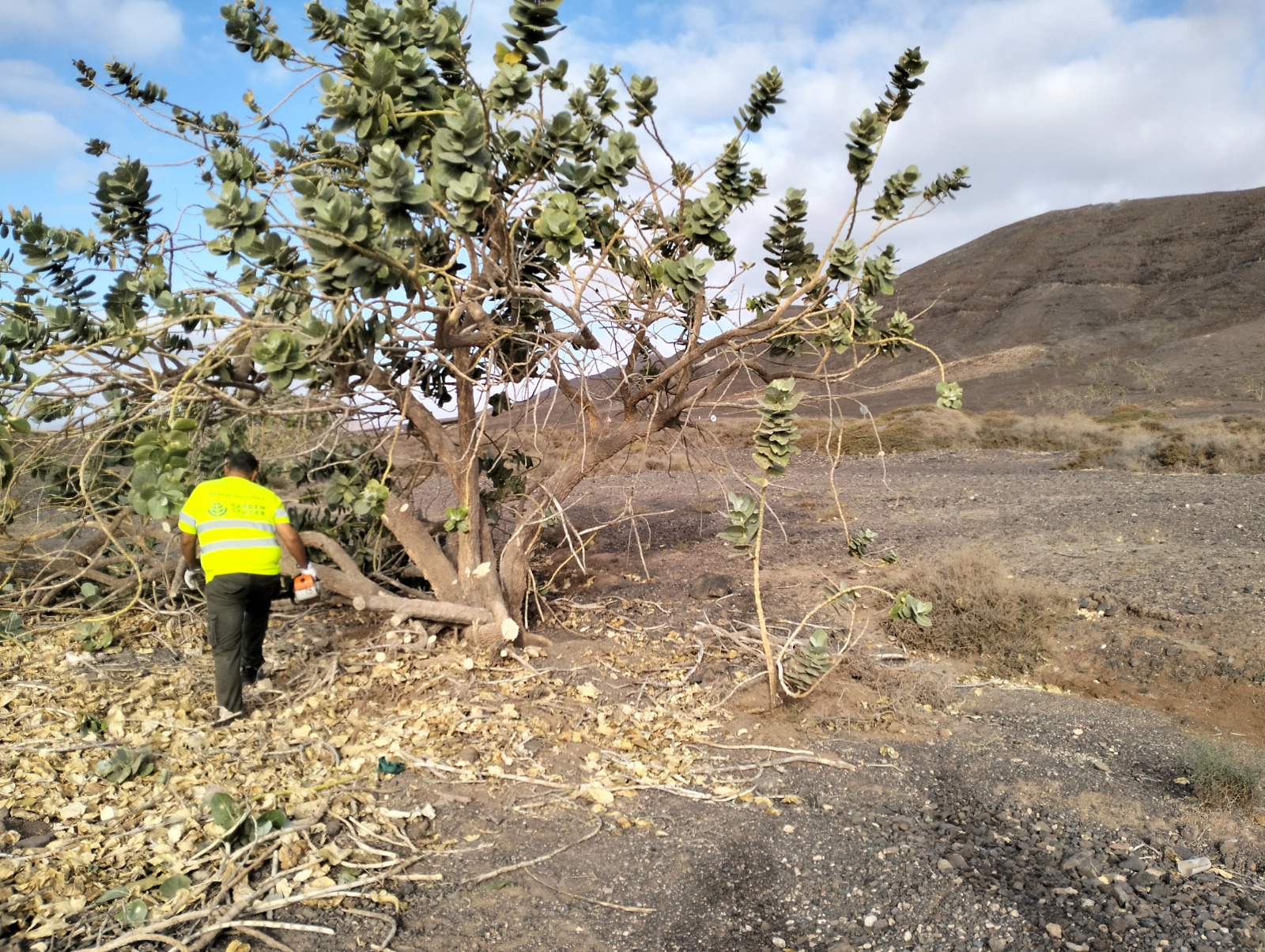
The Calotropis procera, listed as an invasive plant, was at the project’s core, with 6,934 specimens removed by the project’s end. This species threatens the dry ecosystems in the Canary Islands by displacing native flora and disrupting endemic plant communities. Both the Council President, Lola García, and the Environment Councillor, Carlos Rodríguez, emphasised the importance of ongoing management of invasive species to prevent their rapid spread and support the recovery of native plants.
The project, commissioned by the Council and executed by GESPLAN, employed a meticulous approach. Before removing each plant, the presence of flowers, fruits, and seeds was checked, with any found being manually removed and bagged to prevent dispersal. Following this, branches were cut using saws or chainsaws, and methods were applied to manage the stumps and root systems. Whenever possible, complete root removal was carried out using manual tools, vehicles, or machinery. In cases where complete extraction was impractical, treatments including covering with black plastic to prevent regrowth and, subsequently, salt applications to encourage desiccation were implemented.
To further reduce regrowth, root extraction was intensified, and periodic checks were conducted to remove new seedlings and shoots.
From June onwards, a specific focus on bulrush (Phragmites australis) was initiated at the Saladar de Jandía. This selective intervention minimised impact on the native vegetation while mechanically and manually reducing bulrush masses, clearing residual areas, and applying black plastic sheeting to block light and limit the regeneration of rhizomes and roots.
The plant material collected during the project was managed through chipping and transporting to designated facilities, primarily the Zurita Environmental Complex, while urban waste and debris were also removed from intervention areas, enhancing the overall condition of the sites.
This initiative is part of the Canarias FEDER 2021-2027 Programme, which is 85% co-financed by the EU’s Regional Development Fund.


