



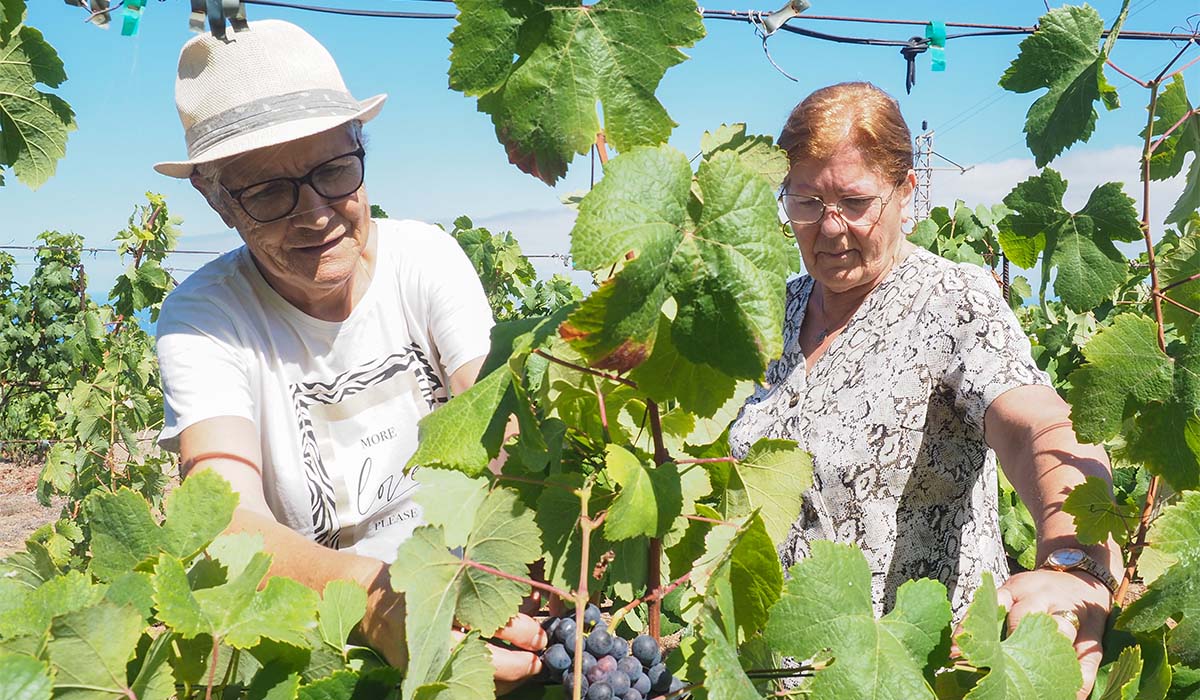
Guacimara García, 44, a resident of El Farrobillo in Santa Úrsula, considers herself “more of the countryside than a poppy.” She works in farming because of her passion for the land, following in the footsteps of her parents, both of whom are agricultural workers. Guacimara holds a degree in teaching and balances her profession with her love for agriculture, a sentiment shared with her sister.
Reflecting on her childhood, she recalls her father’s struggle to support the family by juggling hospitality work with farming. He always encouraged them to study for a better life than his own. Agriculture and rural work are deeply cherished in her family, despite the hard realities involved.
This situation mirrors that of many women in rural areas, prompting Guacimara to participate in a study initiated by the local council. The research, led by Ana María Morales Hernández with support from Elena P. González Negrín and Elena Vega Cuesta, aimed to explore the experiences of women in rural settings, particularly regarding the challenges they face and potential improvements in public policy.
The study focused on neighbourhoods like Las Toscas, El Farrobillo, La Vera, and La Corujera, including nearby areas such as El Cantilo and La Tosquita. Participants highlighted their needs and proposed measures to enhance equality, mobility, and social conditions in these historically significant rural communities.
Using a mixed-methods approach, the research involved 271 women over the age of 20 from the selected areas, who completed surveys covering various aspects of their lives, including sociodemographic profiles, transportation, quality of life, gender inequalities, and proposals for improvement.
Additionally, 48 women engaged in qualitative discussions about the significance of being a rural woman today, how mobility affects their daily lives, and the challenges they face accessing resources. Among them were María Jesús González, María Isabel Pérez, and Juana Evangelista González, all with strong ties to agriculture. María Jesús, for instance, rejected her mother’s advice to stay away from the fields and instead pursued academic and professional success, viewing the countryside as a hobby rather than a source of hardship.
María Isabel shares a similar story, having grown up in an agricultural family but still prioritising her education. Juana, aged 78, remains a living memory of the hard work in local farming and packing industries.
All four women proudly identify as rural residents, recognising that their lifestyle is not limited to agriculture; it encompasses a broader sense of identity, quality of life, and food independence. They insist on dispelling outdated notions that equate rural living with a lack of education or opportunities.
Their insights have been vital in shaping proposals aimed at enhancing living conditions in these communities, the foremost being improving public transport to reach remote areas more effectively. They emphasised the need for better road infrastructure, accessible sidewalks, and the elimination of architectural barriers.
The calls for stable socio-cultural programming, specific activities for women, digital skills training, and youth involvement in agriculture also emerged as significant areas for development.
On 15 October, the International Day of Rural Women acknowledges the contributions of women in these communities. The equality department of Santa Úrsula’s council initiated this study, funded by the Cabildo of Tenerife, to examine the evolving identity of rural women amid economic changes in the municipality. Ana María Morales Hernández noted that the research seeks to define the profile of women in the area, illustrating how their roles have shifted beyond agriculture while still celebrating its enduring cultural significance.