



New Study Reveals Magma Accumulation Beneath Tenerife
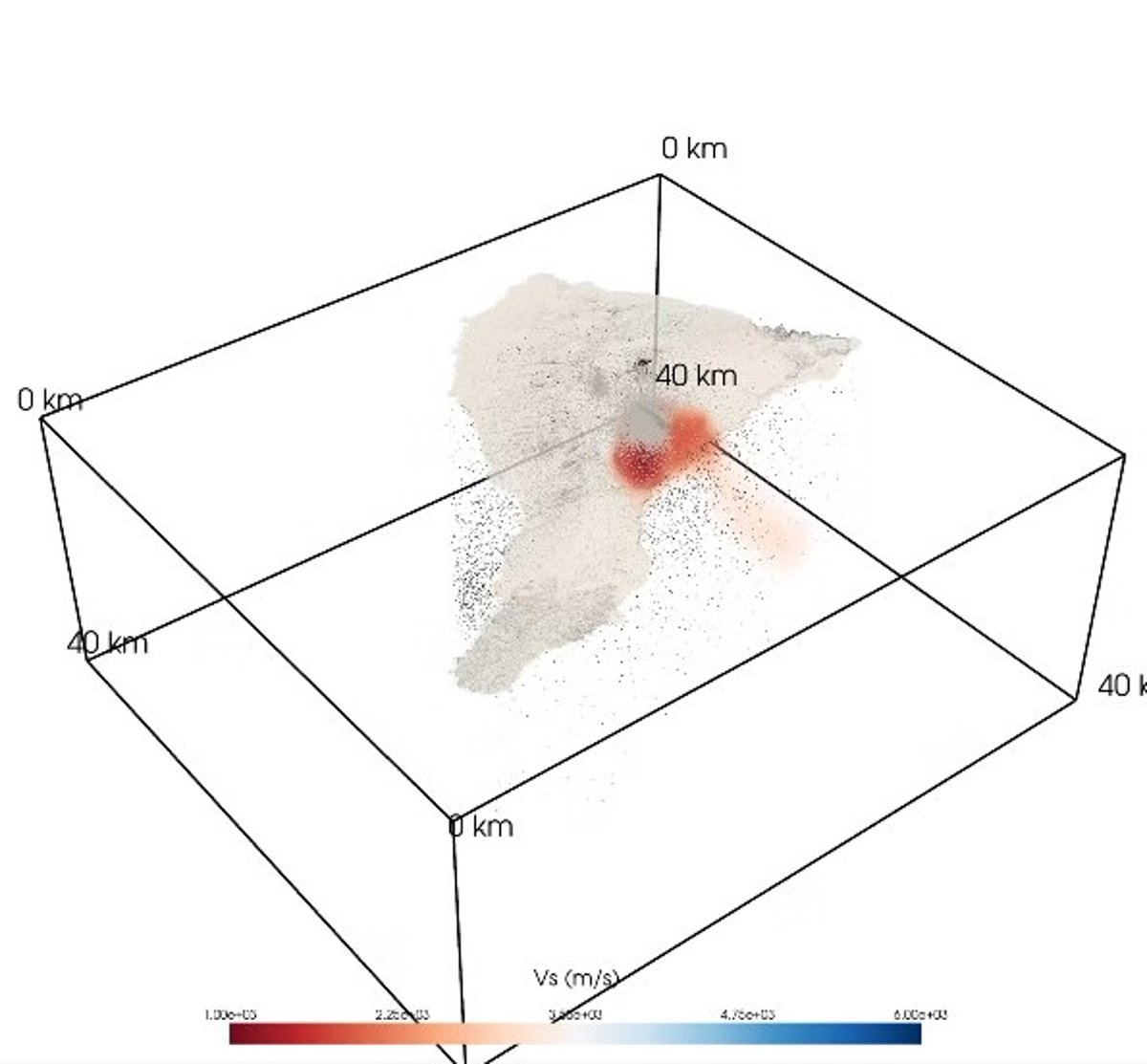
A recent study has produced the first three-dimensional image of the deep structure of Tenerife’s crust and upper mantle, identifying areas of low seismic velocity that may indicate magma storage at the base of the island’s ancient oceanic crust.
Led by Víctor Ortega Ramos from the Volcanological Institute of the Canary Islands (INVOLCAN) and a doctoral student at Complutense University of Madrid, the research involved collaboration with ITER (Technological Institute of Renewable Energies), the University of Geneva, and Portugal’s Institute for Vulcanology and Risk Assessment (IVAR).
Tenerife is the largest of the Canary Islands and hosts one of the archipelago’s most complex volcanic systems, centred around the Teide-Pico Viejo volcanic complex, where three volcanic ridges converge. Previous studies had suggested a complex magmatic system beneath the island, with varying levels of magma storage extending from the upper crust to the mantle.
The current study, which reconstructed the island’s deep structure, was made possible through the analysis of over 785 teleseisms—large earthquakes recorded from various global locations by the Canary Seismic Network between 2017 and 2024. The researchers used receiver function techniques to examine how seismic waves change as they pass through different layers within the Earth, allowing for a detailed reconstruction of the subsurface.
Oceanic Crust Findings
The researchers highlighted a key finding: a relatively rigid layer of oceanic crust approximately 10 kilometres thick, marked by higher seismic wave velocities. Below this, a more heterogeneous structure was found, featuring four significant areas of low seismic velocity distributed across different sectors of Tenerife, between depths of 10 and 30 kilometres. These low velocities suggest regions of elevated temperature or altered rock properties, likely associated with the presence of magma from the upper mantle.
Magma Accumulation
Notably, the study identified exceptionally low seismic wave velocities beneath western Tenerife, indicating a substantial amount of molten material—magma. The correlation between the low seismic speeds and higher melted material fractions suggests a rich magma zone in the upper mantle. This accumulation may stem from magmatic underplating, where mantle-derived magma gradually collects at the base of the oceanic crust.
Volcanic Structure Evolution
Throughout Tenerife’s geological evolution, these processes may have significantly altered the physical and chemical characteristics of the crust and upper mantle. The findings provide new insights into the construction and evolution of Tenerife’s volcanic structure from its deepest levels. There is also a spatial link between the low-velocity anomalies and recent seismic activity on the island, with many earthquakes occurring above or near the main low-velocity anomaly. This distribution may connect to the movement of magma in deeper regions, leading to reduced pressure and the release of gases, mainly carbon dioxide.
Future Research Directions
These results enhance our understanding of the deep architecture of Tenerife’s magmatic system and its connection to surface seismicity and gas emissions. The study underscores the significance of magmatic underplating in the evolution of the crust’s base in oceanic volcanic islands.
Future investigations will aim to further detail the geometry, extent, and connectivity of these deep zones, integrating seismic findings with other geophysical, petrological, and geochemical methodologies. The goal is to better comprehend the mechanisms of magma storage, accumulation, and transfer beneath Tenerife, which will aid in interpreting changes in seismic activity, gas emissions, and other volcanic monitoring parameters that may signal future eruptions.