


The Historic Heritage Area of the Tenerife Council will replace the mesh protecting the bell tower of the San Juan Bautista Church in the Villa de Arico with a sturdier version in the coming days. The council stated that this measure will effectively resolve ongoing issues with the structure.
Parish priest Cristo Manuel León expressed concern over the accumulation of pigeon droppings and dead chicks, noting that less than eight months after the church was restored, it has become unmanageable. The recent renovation included a new tea wood roof, an upgraded tower, and restored bells, which had been silent for years. However, the plastic mesh designed to keep out birds has proven ineffective.
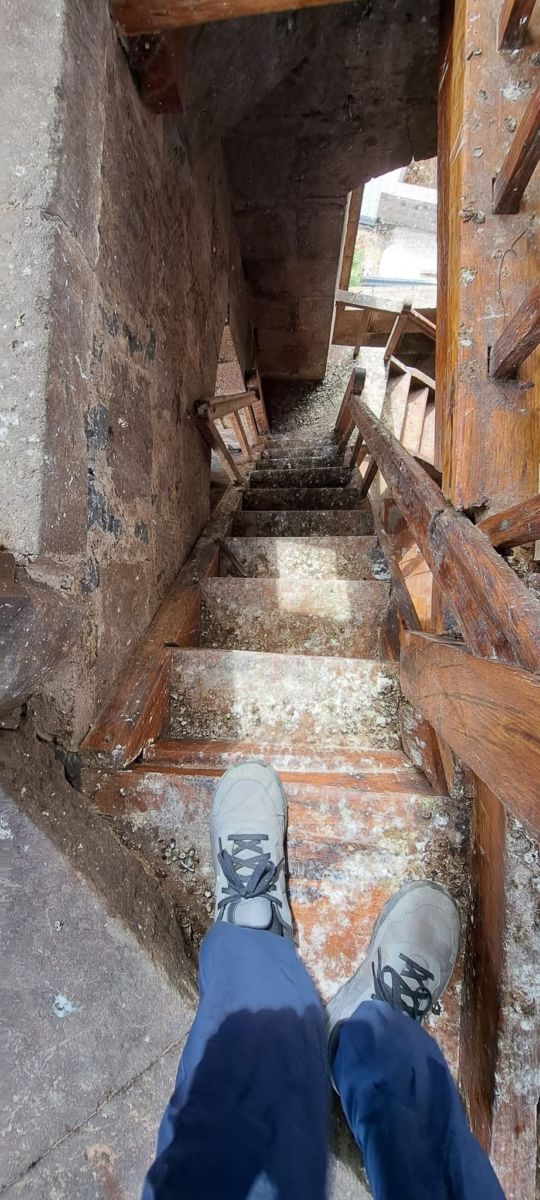
Images from inside the tower reveal wooden stairs covered in a thick layer of droppings, feathers, and nest remnants. The bells, too, are stained after birds found a way past the barriers. “They are smarter than we are,” remarked León, who has since restricted public access due to the conditions inside. Despite these measures, dirt continues to infiltrate the church.
Recently, local technicians and an architect assessed the tower’s condition and proposed solutions, such as using acrylic windows or metal mesh frames.
The church holds significant historical value, having been founded on the feast of San Juan in June 1639, largely thanks to community efforts. Historical records show that on May 14, 1693, the town financed the construction of what is believed to be the first bell tower with the purchase of bells brought from the north of the island.
In the 18th century, the church’s current appearance took shape, crafted from chasnera stone by master stonemason Juan de Armas. By 1789, when three new bells were needed, contributions came from all corners of the southern municipality, including Lomo de Arico and Chimiche.
Almost four centuries later, during the XIII Bajada de la Virgen de Abona, local residents, frustrated by the lack of action from authorities, decided to use the donations from the pilgrimage homilies to help protect the bells, showcasing the community’s enduring commitment to their heritage.


