


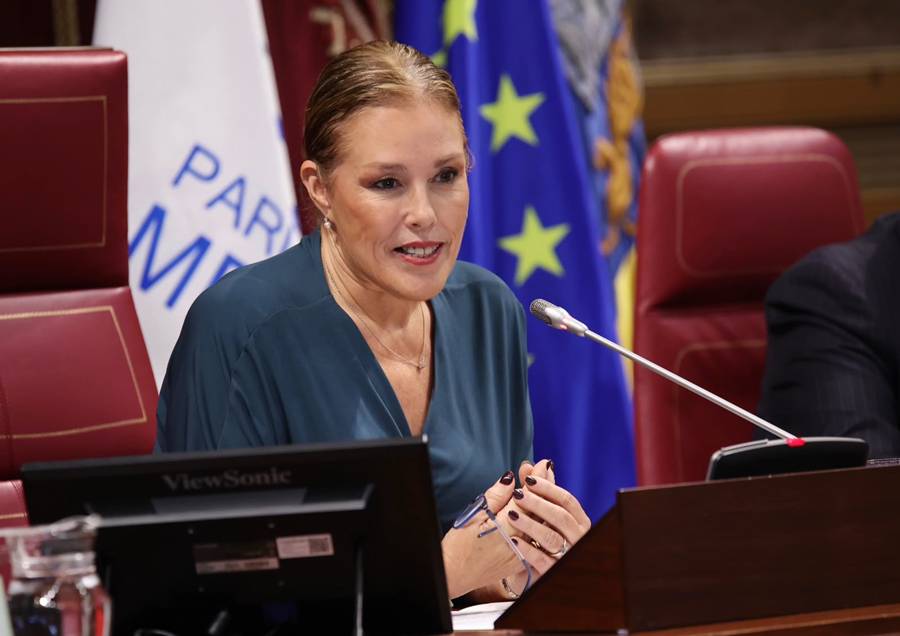
The first plenary assembly of the Euro-Latin American Parliamentary Assembly (EuroLat) took place this week in the Canary Islands, highlighting the region’s significant role in fostering dialogue between Europe, Latin America, and the Caribbean. Its geographical location and shared history have established the archipelago as a cultural crossroads.
Canarians have crossed the Atlantic for centuries in search of better opportunities, leaving their mark on countries such as Cuba, Venezuela, Uruguay, Puerto Rico, and the Dominican Republic. This shared heritage strengthens the relationships we discuss between Europe and Latin America, rooted in family ties and a collective identity.
The 20th anniversary of EuroLat also reflects on the considerable global changes over the last two decades. Since 2006, the world has faced economic crises, a pandemic, inflation, and rapid technological advancements. Issues such as climate change and food security require cooperative solutions, as no single country can tackle these challenges alone.
Gabriel Mato, President of the European Component, stated, “In an era of increasing geopolitical challenges, where democracy encounters more obstacles, it is essential for two major global blocs to maintain fluid and fruitful dialogue.”
A crucial takeaway from the assembly was the need for more cooperation and constructive dialogue, rather than retreat and distrust. Multilateral relations are vital for addressing shared challenges and preventing countries’ differences from becoming insurmountable barriers. Parliamentary meetings like EuroLat demonstrate that understanding is achievable when there is a willingness to listen and negotiate.
However, it is imperative to remember that democracy cannot be taken for granted. Political polarization, misinformation, and declining trust in institutions pose significant threats to society. We have seen constitutional democracy eroded under pretenses that preserve its appearance but undermine its foundations, a warning we must heed.
Democracy encompasses more than just conducting elections; it requires respect for the Constitution, judicial independence, separation of powers, political pluralism, and effective human rights protection. Without these pillars, power risks becoming unrestrained, exposing citizens to arbitrary decisions.
One key lesson is that there can be no solid democracy without the rule of law or lasting freedom without independent institutions to uphold it. Upholding these principles should rise above partisan interests and be a democratic obligation.
Parliaments play a crucial role in defending democracy by representing political pluralism and ensuring public decisions are subject to democratic oversight. It is vital to disagree within the framework of democracy without undermining its legitimacy or protections.
As President of the Conference of Regional Legislative Assemblies of Europe (CALRE), which includes 69 regional parliaments, I have seen the importance of cooperation among parliamentary institutions. Although CALRE and EuroLat operate in different domains, both share a belief that democracy is strengthened through dialogue, collaboration, and active participation in decisions impacting citizens.
Regional dimensions are essential in international relations. Proximity helps us understand people’s issues better and share experiences that could become valuable solutions elsewhere. Strengthening ties between parliaments means making institutions more accessible to society and enhancing our democracies’ ability to meet needs.
In conclusion, EuroLat has reinforced two inseparable ideas: that the Canary Islands can play a significant role in bridging continents due to their history and Atlantic position, and that this dialogue must be grounded in shared values and a steadfast commitment to democracy, freedom, and the rule of law.
The outcomes of these discussions remind us that international cooperation necessitates robust institutions, that democratic coexistence requires accountability, and that bonds between nations must be based on mutual respect.
The Atlantic is more than just a physical barrier; it connects us. It’s through dialogue, freedom, and democracy that we can move forward together.
By Astrid Pérez, President of the Parliament of the Canary Islands and the Conference of Regional Legislative Assemblies of Europe


