



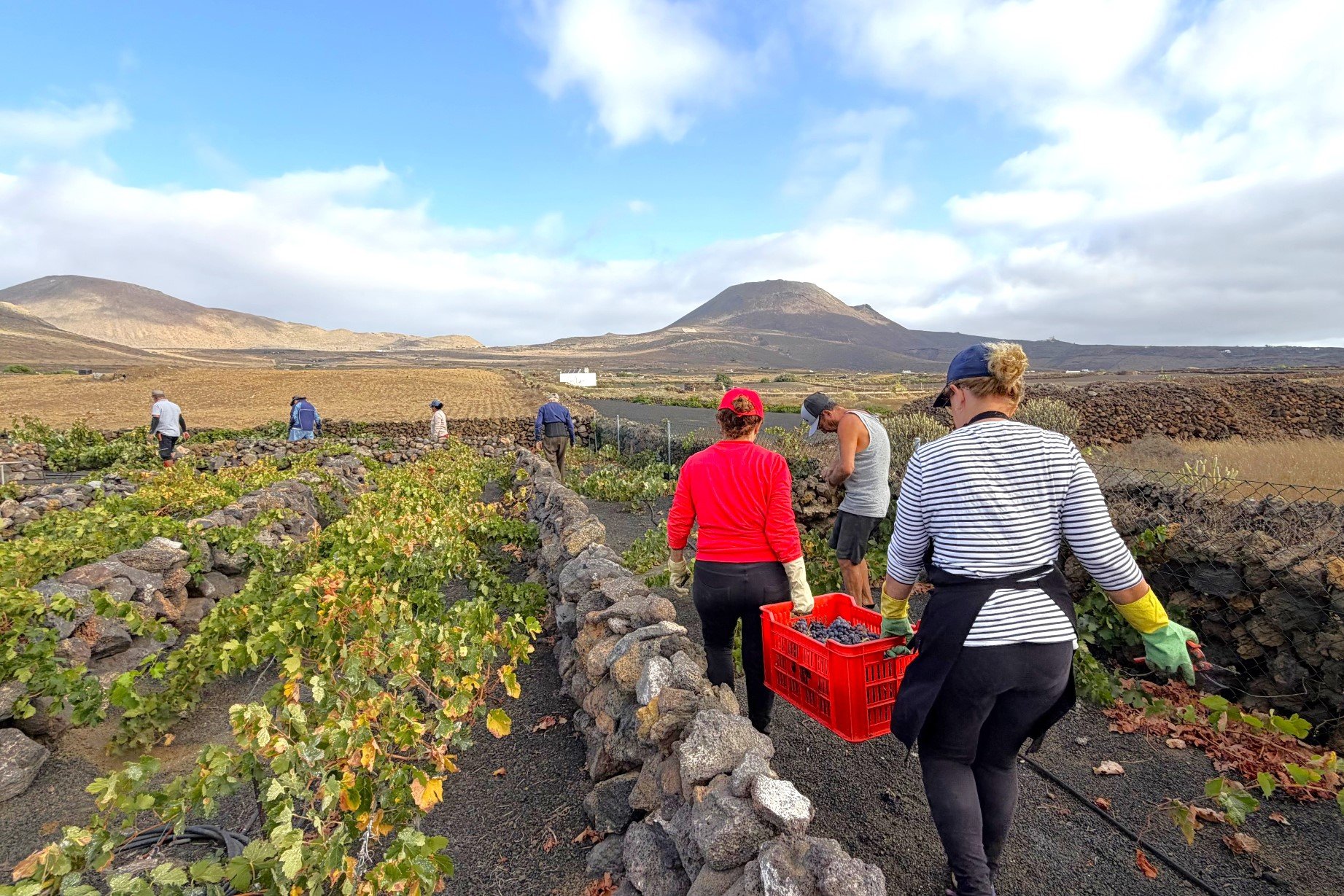
The Denomination of Origin for Lanzarote Wines is approaching the end of the 2026 vintage season with optimism. Early estimates suggest the harvest could exceed three million kilograms of grapes, a welcome improvement following two years of disappointing yields.
The Regulatory Council has noted the exceptional state of the grapes this year, which bodes well for the quality of wines being produced. This positive outlook is encouraging for both viticulturists and winemakers, showing the sector’s resilience and commitment to excellence.
As 2026 draws to a close, the Regulatory Council is reflecting on a particularly eventful year, during which training, promotion, and sector support remained key priorities.
To enhance industry knowledge, a practical viticulture training programme was conducted, led by experts Julio Prieto and Emilio Peiró. This included hands-on sessions focusing on vine pruning, pest control, efficient irrigation management, and green pruning, allowing participants to observe real results on the island’s vineyards.
Additionally, a significant course led by winemaker Xabier Kamio explored the Listán Negro grape, a key variety for the region. Attendees learned about the grape’s characteristics and the various winemaking techniques that achieve a wide range of wine profiles while maintaining the grape’s identity.
The council hosted three guided hiking routes to showcase Lanzarote’s viticultural heritage, allowing participants to appreciate the unique challenges of grape cultivation on the island’s volcanic terrain. Each hike concluded with wine tastings from local wineries, including Bodega Erupción, Rocanegra, and Tao Viticultores.
The gastronomic aspect was highlighted through the Enogastronomic Experience at the Cactus Garden, where four Lanzarote wines were paired with traditional dishes, celebrating the synergy between local wines and cuisine.
This summer also featured the popular event “Érase una vid,” hosted by Lanzarote storyteller Isabel Cabrera at Bodegas El Grifo, the oldest winery in the Canary Islands. Attendees enjoyed tales rich in humour and tradition while tasting various wines from the estate.
Beyond educational activities, the Regulatory Council is committed to ongoing support for the vineyard sector, including quality control, certification, and advising on subsidies and administrative procedures that bolster competitiveness.
In June, a new project was initiated with the Cabildo de Lanzarote aimed at enhancing inspection and monitoring efforts against phylloxera, a significant threat to the island’s vineyards. This initiative will enhance detection capabilities over the next year.
As the harvest approaches its conclusion, the Denomination of Origin Vinos de Lanzarote is already preparing for its next major event, the twelfth Semana Malvasía, taking place from 3 to 8 November. This established festival will once again feature Lanzarote wines prominently, offering a blend of culture, gastronomy, tradition, and entertainment.
This event is an opportunity to further engage the public and showcase the dedication of the wine sector, which, through the commitment of viticulturists, winemakers, and institutions, continues to preserve one of the world’s most unique agricultural landscapes and share the identity of Lanzarote through its wines.