



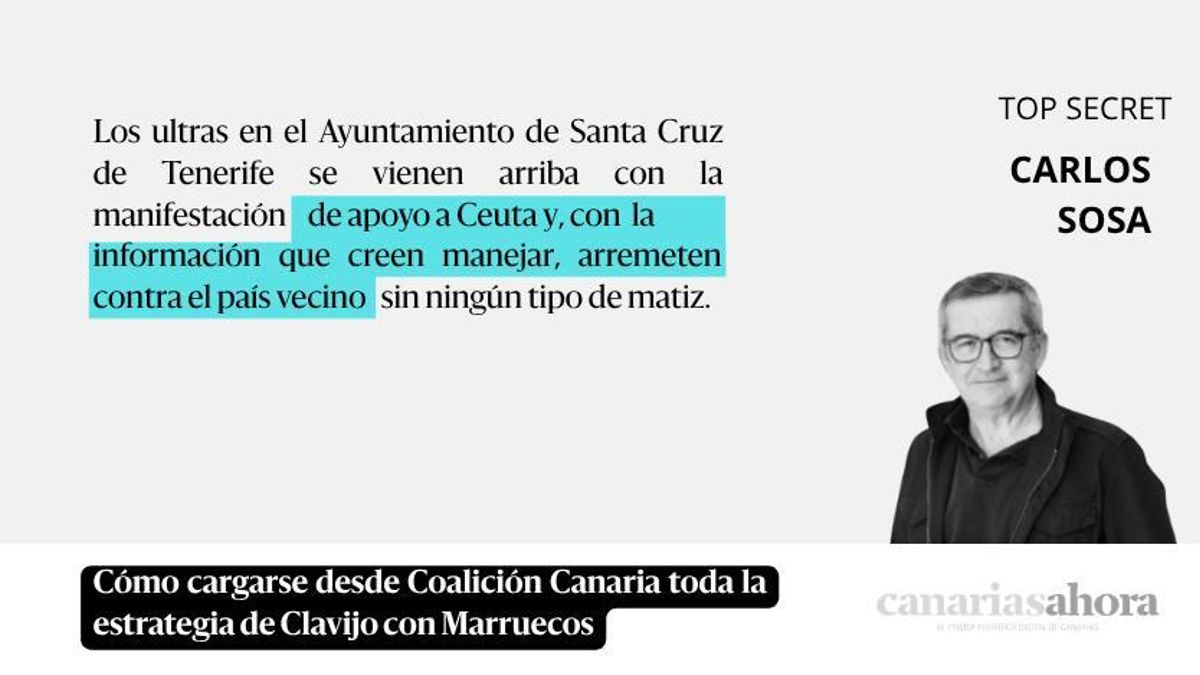
Political tensions are escalating in Santa Cruz de Tenerife following a call to protest in solidarity with Ceuta, which has been grappling with serious unrest. The demonstration, organised by the Spanish Federation of Municipalities and Provinces (FEMP), has sparked divisive commentary from local politicians.
The FEMP’s initiative, led by María José García-Pelayo, Mayor of Jerez, has met with varied responses. Some mayors have taken the opportunity to deliver their own politically charged messages instead of focusing solely on solidarity. For instance, Onalia Bueno, Mayor of Mogán, released a controversial video linking past migrant crises to the current situation in Ceuta, which some critics view as tone-deaf.
In Arrecife, Mayor Yonathan de León of the Popular Party took a harsher stance against the opposition and the national government, aligning closely with the far-right group Hazte Oír, known for its provocative activism in Lanzarote.
Conversely, the council in Puerto del Rosario adopted a more cautious approach, issuing a statement that demonstrated responsibility and a call for moderation given the sensitive nature of the current political climate.
In Santa Cruz, the governing coalition of José Manuel Bermúdez (Coalición Canaria) and Carlos Tarife (Partido Popular) ramped up rhetoric that seemingly undermined the regional government’s diplomatic strategies with Morocco. Bermúdez’s comments hinted at aggressive posturing, urging a strong defence of Spanish territorial integrity in light of the situation in Ceuta, where 70,000 people crossed the border last month.
José Alberto Díaz-Estébanez, spokesperson for the coalition, echoed these sentiments, expressing concerns over a lack of clear rules regarding relations with Morocco and underscoring the need for firm responses to such crises. His remarks sparked a backlash, particularly as they seemed to contradict broader diplomatic efforts initiated by Fernando Clavijo, the Canary Islands’ President, who aims to foster cooperation with Morocco.
Clavijo’s administration has sought to improve ties with Morocco, emphasising the importance of a stable relationship amid ongoing challenges. His recent diplomatic visits sought to reframe perceptions of the Canaries as strategically significant rather than relying on reactive measures to transnational tensions.
In contrast, Clavijo’s coalition partners, including Vice-President Manolo Domínguez, have made scathing remarks about the Spanish government’s handling of its relationship with Morocco, highlighting a clear division within the local government’s strategy.
As tensions simmer, political leaders must navigate these complex issues carefully, balancing local sentiments with broader diplomatic objectives while remaining aware of the precarious situation in Ceuta.