



In the summer of 2013, blood reserves in the Canary Islands reached a critical low. To address the situation, blood bank worker Siria Gutiérrez discussed the issue at home, prompting her mother to suggest bringing a mobile donation unit to Tejina during the local “Fiestas de los Corazones.” This idea, born from a casual conversation, has evolved into a key community event over the years. Now in its thirteenth edition, the “Nectar de la Vida” campaign mobilised over 300 donors in a friendly competition between the streets of Arriba, Abajo, and El Pico.
Last year, the campaign nearly reached the target of 300 donors, so this time they aimed to surpass it. The collection concluded recently, and on Tuesday, Gutiérrez announced the good news: 329 locals came forward to donate, with 269 successfully completing their donations. Gutiérrez has set a goal of over 300 effective donations for 2027, emphasising the need for increased participation.
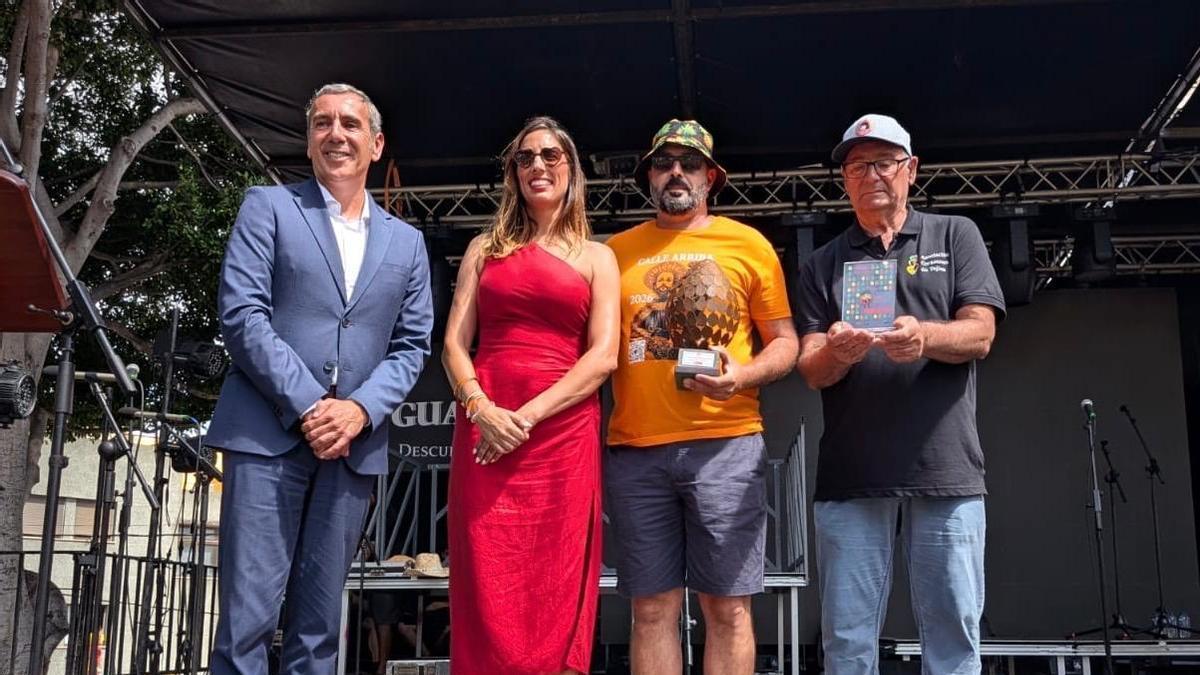
Though the three streets united for a common cause, they also engaged in a light-hearted rivalry, with the street attracting the most donors declared the winner. This year, Calle Arriba took the trophy, ending Calle Abajo’s previous dominance.
Inaugurated in 2018, the trophy tradition has continued, with Calle Arriba winning this year, marking their first recognition since their previous victory.
The “Nectar de la Vida” campaign is one of the blood bank’s most effective initiatives. During summer, donation rates drop significantly, with a reduction of 30 to 35% according to the General Directorate of Blood Donation and Haematology. Many regular donors are away on holiday, making it harder to maintain donation levels.
August is typically a challenging month for the blood bank, but events like this help mitigate the decline. To enhance participation, the community of Tejina even created their own promotional materials. As long as locals continue to support the initiative, the General Directorate plans to return each August.
This year, Calle Arriba amassed 121 participants, Calle Abajo 118, and Calle El Pico 90. Overall, 29 new donors joined, marking an 11% increase from last year’s participation. The mobile unit won’t return to Tejina until January to allow for further donations during the holidays.
To donate blood, individuals must be aged 18 to 65 (or up to 60 for first-time donors), weigh over 50 kg, be in good health, and not be pregnant. Men can donate up to four times a year, while women can donate three.
So far in 2026, blood donations in the Canary Islands have increased by 2.14%, although the rise is modest but essential after the significant crisis the blood bank faced following its incorporation into the public health system. In the first five months of the year, the blood donation programme collected 25,609 donations, 536 more than in the same period the previous year.
Even during the holiday season, fixed donation points remain active. Next week, mobile donation units will be stationed at various locations across the islands, including Telde and Firgas in Gran Canaria, Puerto del Rosario in Fuerteventura, and Santiago del Teide and San Cristóbal de La Laguna in Tenerife.