


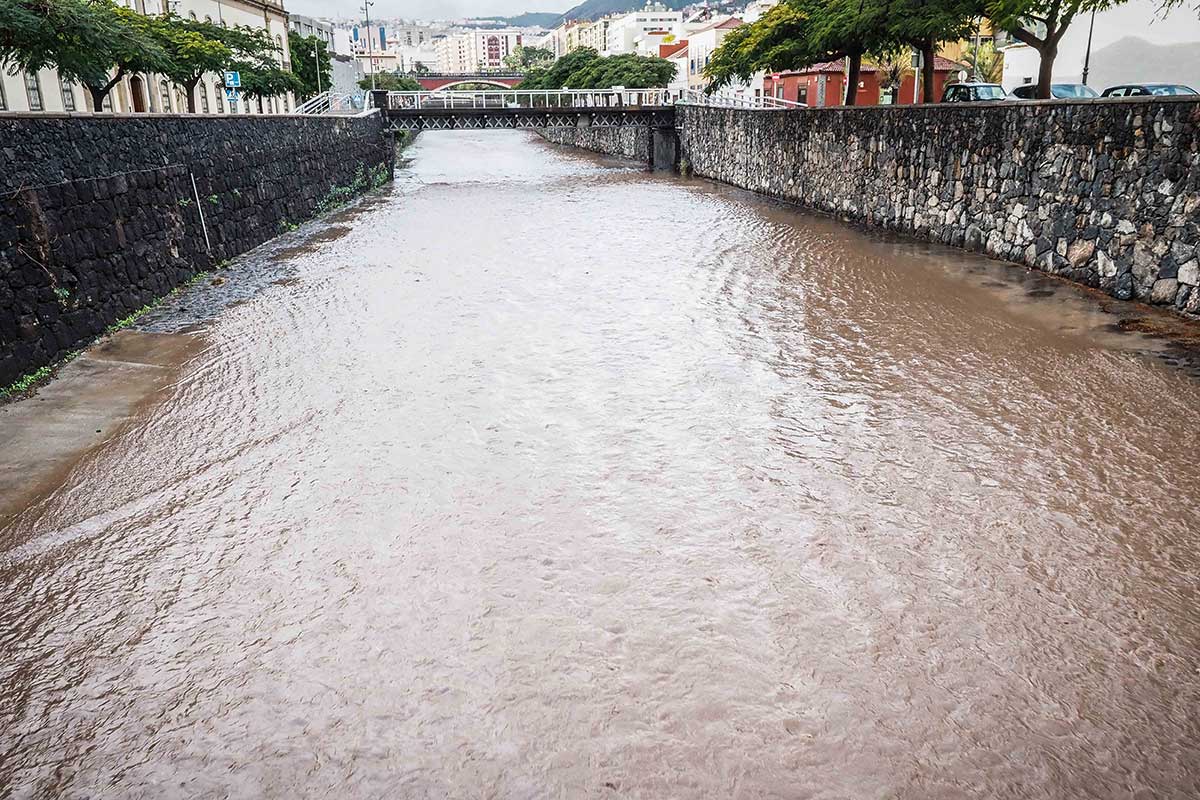
Over 11,000 people in Tenerife are living in areas at significant risk of flooding, according to a report from the Association of Construction Companies and Infrastructure Concessionaires (Seopan) and engineering firm TYPSA. The report highlights the urgent need for an investment of €1.685 billion by 2035 to improve water management and mitigate the effects of droughts and floods on the island.
Of that total, €1.647 billion is earmarked for addressing water supply needs, with an additional €38 million aimed at bolstering flood protection infrastructure. The report, titled Strategy and Investments for Water Efficiency and Resilience in Spain, assesses the requirements for various Spanish hydrological areas from 2026 to 2035.
Tenerife’s water challenges stem from high demand, particularly for irrigation, which spikes during peak tourist seasons. The report estimates that 11,258 residents are situated in flood-prone areas that may be affected by either rainfall or river overflow. This figure is part of a larger statistic of 2.73 million people across Spain living in high-risk flood zones.
To combat this risk, the report suggests investing €28 million in structural measures, mainly for drainage systems and other protective infrastructure, along with €10 million for green infrastructure aimed at coastal protection and climate change adaptation.
Much of Tenerife’s proposed investment focuses on urban water infrastructure, amounting to €1.423 billion. This includes €161 million for climate adaptation efforts, particularly concerning seawater desalination plants, and €32 million linked to a National Water Agreement focused on irrigation management.
The report also warns of a 4% decline in rainfall from 2010 to 2040, coupled with increasing tourist activities exacerbating water demand in certain months. Given these challenges, there is a pressing need to boost desalination output and enhance existing resource efficiency.
Seopan’s president, Julián Núñez, argues that water scarcity is no longer an exceptional issue in Spain, demanding a structural solution with adequate financial support to ensure adherence to water management plans.
Lastly, the report notes that only 30% of the intended water infrastructure measures have been executed due to financial constraints and lengthy public procurement processes. Across Spain, Seopan and TYPSA estimate that €103.824 billion is required between 2026 and 2035 to modernise hydraulic infrastructures and fortify protections against extreme weather.


