


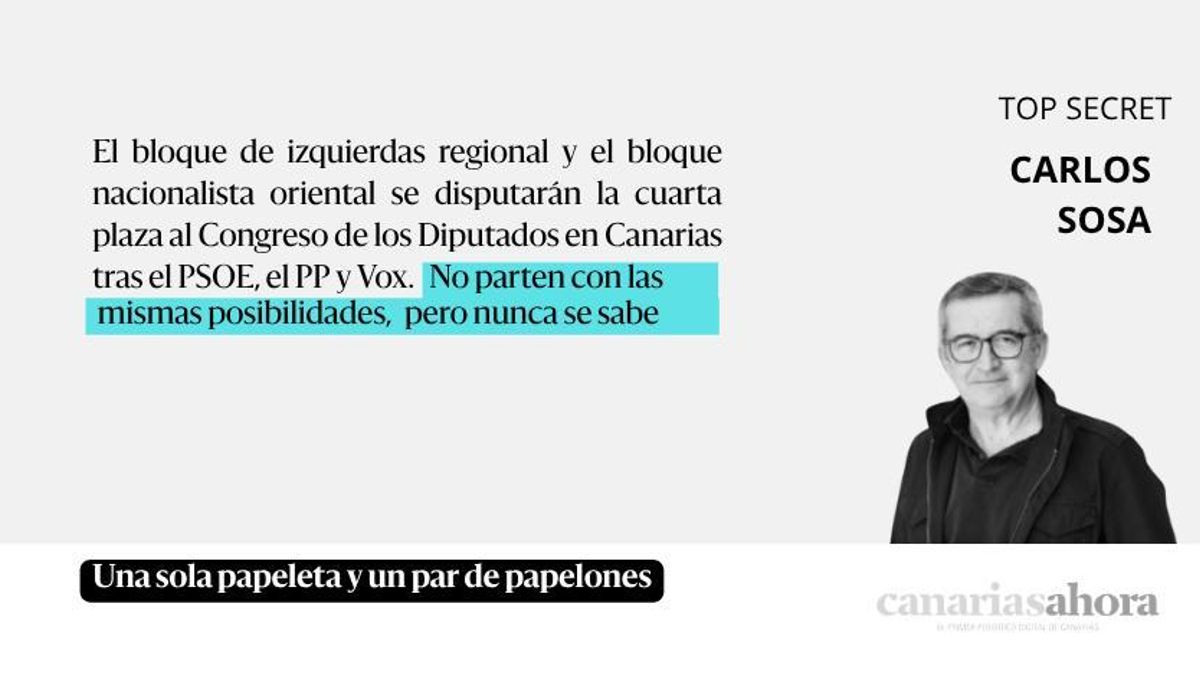
The left-wing coalition in the Canary Islands is vying for the final parliamentary seat, competing against the PSOE, PP, and Vox. Although they face challenges, the outcome remains uncertain.
The idea of unifying leftist votes to create a stronger opposition against the right has been championed by various leaders, including Roman Rodríguez, founder of Nueva Canarias. Known for his political savvy, Rodríguez has previously forged alliances with both PSOE and Coalición Canaria to ensure representation in Madrid.
Rodríguez has been in talks with Izquierda Unida, Podemos, Sumar, and other left-leaning groups, receiving positive initial feedback. His strategy suggests a good chance for a parliamentary seat in Las Palmas and potentially Santa Cruz de Tenerife, provided Drago Canarias joins the coalition.
As discussions progressed, they proved more challenging than expected, likely due to the pressures and expectations from Madrid’s political landscape. Ultimately, the coalition forged, named Unidad del Pueblo Canario, will be led by Rodríguez’s party, with Luis Campos as the candidate. Campos took over the leadership during a turbulent period for Nueva Canarias after local leaders rebelled against Rodríguez’s strong leadership style.
Rodríguez now faces a crucial election for his party, which is reeling from departures to Coalición Canaria. This situation presents a key test for their electoral support.
On the other side, Coalición Canaria, along with Municipalistas Primero Canarias, has formed their own coalition, seeking greater influence in Gran Canaria’s local governance.
Teodoro Sosa, the mayor of Gáldar, will lead his party’s bid in a challenging environment that may expose vulnerabilities in his own organisation. In a surprising twist, Sosa is reportedly being backed by Coalición Canaria for a candidacy to lead the Cabildo, despite the significant hurdles he faces.
This complex scenario comes after a week of negotiations sparked by Sosa’s unexpected endorsement by Fernando Clavijo. Meanwhile, the left is still entangled with Coalición Canaria, which is allegedly helping Drago Canarias remain viable in the upcoming elections, despite the latter’s lack of substantial institutional representation.
Alberto Rodríguez, leader of Drago but not seized by the opportunity, declined to unite with Unidad del Pueblo Canario, opting to run separately. Drago has managed to secure media presence, but their real impact in these elections remains questionable.
As the campaign trails lead closer to the election day on November 29, unexpected dynamics could alter the electoral landscape significantly. Traditional voter predictions may shift rapidly due to the evolving political environment, and the emergence of Vox adds another layer of complication to the races in both Santa Cruz and Las Palmas.


