

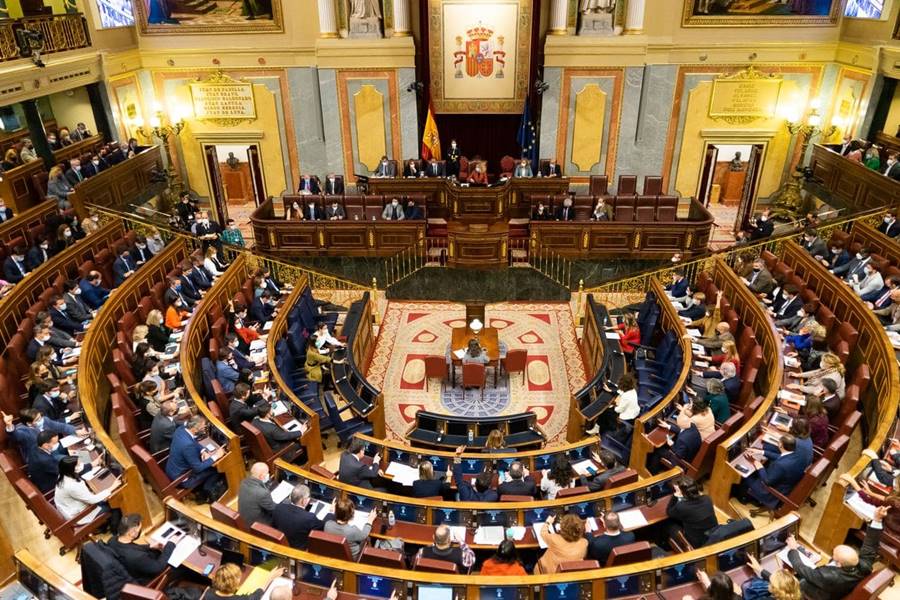
The Canary Islands will elect 15 MPs in the upcoming general elections on 29 November, with eight representing the province of Las Palmas and seven from Santa Cruz de Tenerife.
This distribution of MPs has been detailed in the Royal Decree dissolving the Cortes and calling for elections, published this Tuesday in the Official State Bulletin (BOE).
According to Article 3 of the decree, which applies Article 162 of the Organic Law 5/1985 on the General Electoral System, the allocation is further explained in an annex to the Royal Decree.
The regions with the highest number of MPs include Madrid, electing 38; Barcelona, with 32; and Valencia, with 16. Sevilla and Alicante will each have 12 MPs, while Málaga will elect 11 and Murcia 10. The Balearic Islands, Bizkaia, Cádiz, A Coruña, and Las Palmas will each have eight MPs.
Asturias, Granada, Pontevedra, Santa Cruz de Tenerife, and Zaragoza will each elect seven, while Almería, Córdoba, Gipuzkoa, Girona, Tarragona, and Toledo will have six MPs. Eight other constituencies will elect five MPs each: Badajoz, Huelva, Cantabria, Castellón, Ciudad Real, Jaén, Navarra, and Valladolid.
Four MPs will be elected from Albacete, Álava, Burgos, Cáceres, León, Lleida, Lugo, Orense, La Rioja, and Salamanca. The constituencies with three MPs are Ávila, Cuenca, Guadalajara, Huesca, Palencia, Segovia, Teruel, and Zamora. Soria will elect two MPs, while Ceuta and Melilla will each have one.
For the Senate, each province will have four senators, as stipulated by Article 165 of the Organic Law 5/1985. In the island constituencies, three senators will be elected from Gran Canaria, Mallorca, and Tenerife, and one from Ibiza, Formentera, Menorca, Fuerteventura, La Gomera, El Hierro, Lanzarote, and La Palma. The cities of Ceuta and Melilla will each elect two senators.