



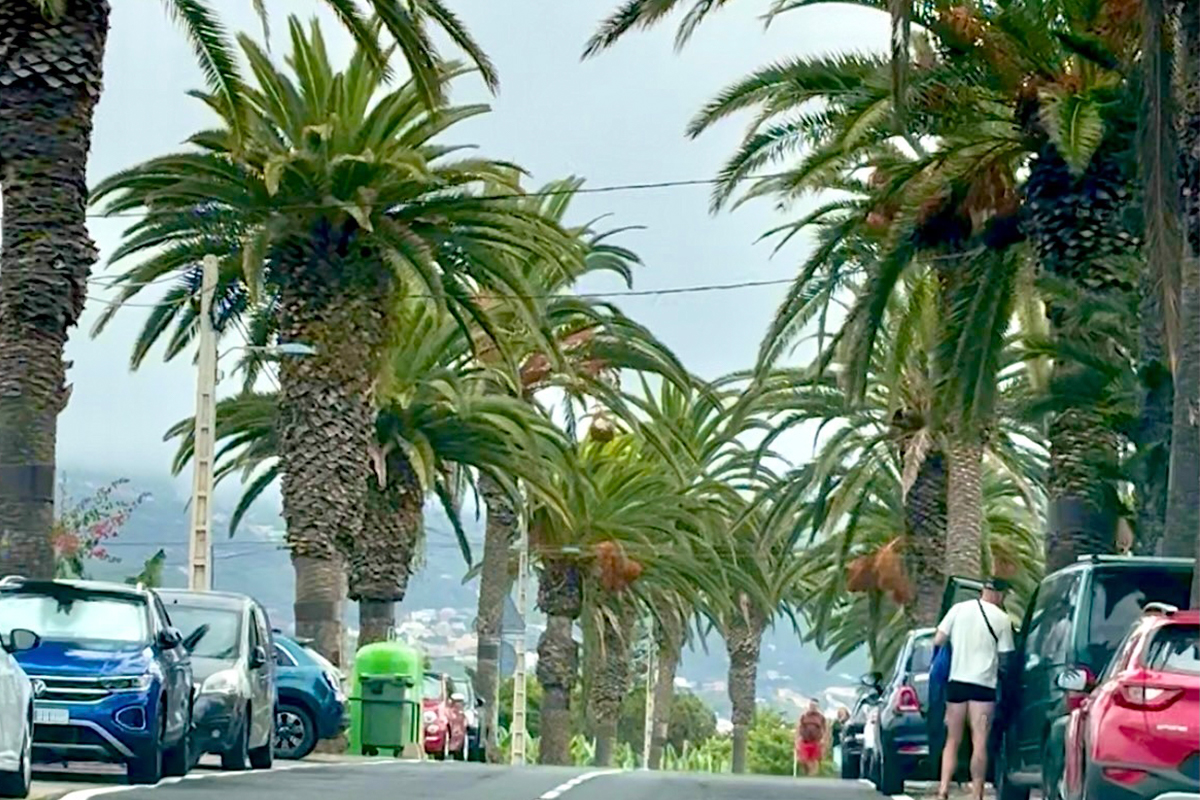
The ecological group Coordinadora El Rincón has submitted objections to the Cabildo of Tenerife regarding its plan to rehabilitate the TF-176 road leading to El Rincón.
Founded in the 1980s to protect this culturally and ecologically significant agricultural area, the group criticises the project’s initial approval on August 3, describing the proposed felling or transfer of 85 Canary palm trees (Phoenix canariensis) as unacceptable. They call this measure a “glaring conceptual, environmental, social, and technical aberration.”
The objections note the project’s justification for removing the trees relies solely on a brief statement about the palm trees’ root zones. The group highlights the absence of any technical studies proving structural risks or the impossibility of coexistence between the road and root systems. They advocate for alternatives, such as root barriers or road adaptations. Many of the palm trees were historically planted by local residents and are integral to El Rincón’s cultural landscape; their removal would disrupt local historical memory, the group warns.
Concerns also arise over transparency, as the group alleges the Cabildo has followed a “poorly transparent” strategy. The project was announced during the holidays, with little social media promotion despite being in a public consultation phase. The group questions how the Cabildo, a member of the El Rincón Consortium managing this protected area, could overlook these decisions in its meetings.
Furthermore, the plan lacks reference to the 1992 Law for the Regulation of the El Rincón Zone and its Special Plan, designed to safeguard the agricultural landscape from urban pressures. There is also criticism that the project ignores recommendations from the Sustainable Mobility Plan for El Rincón, which aims to reduce vehicular traffic and improve public transport and pedestrian comfort.
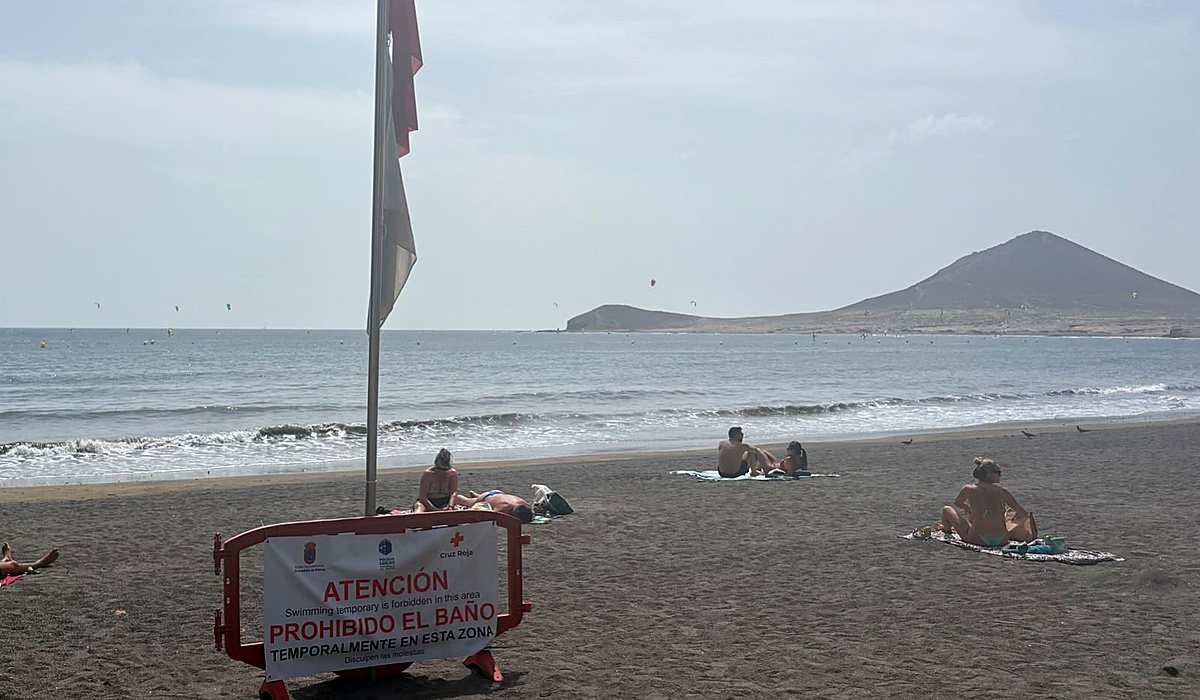
One major point of contention is the project’s failure to include pedestrian safety measures, even though the design acknowledges significant foot traffic on the road, which serves as a primary route to nearby beaches. The group labels the decision to prioritise parking over pedestrian protections as “irresponsible.”
Coordinadora El Rincón is calling for the project to be paused and re-evaluated. They propose creating a safe pedestrian pathway separate from parking, considering alternatives to tree removal, implementing speed limit measures in line with regulations, and reforming the project within the Consortium to ensure a socially and institutionally agreed approach, along with public participation.
The group concludes that proceeding with the current project would violate public management responsibilities and urges the Cabildo to reconsider its stance.