


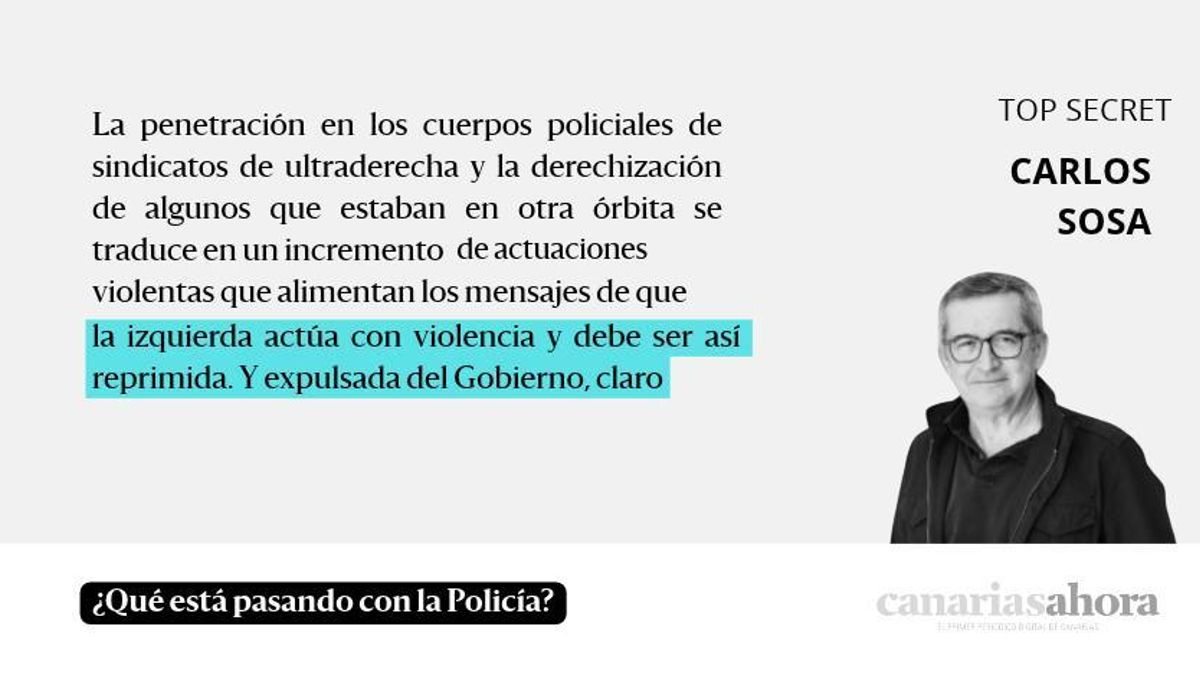
Concerns are growing in Spain over the increasing influence of far-right unions within police forces and a shift in attitudes among others towards harsher measures that disproportionately target the left. This trend is linked to a rise in violent incidents, giving credence to narratives that portray leftist groups as violent and justifying their suppression.
There has been a noticeable deterioration in professional conduct among police across the country. This includes excessive force and a rigid application of the law, often accompanied by displays of fascist symbols and a move towards a populist call for “law and order” against left-leaning protesters.
Issues are not confined to the National Police, as exemplified by the Unit of Police Intervention (UIP), which has been involved in numerous violent incidents now becoming commonplace during leftist demonstrations. In contrast, when right-wing groups protest, police behave in a far more lenient manner.
An incident in September in Ceuta involved local MP Julia Ferreras, who was verbally and physically assaulted by a group while driving. Police response was minimal, and none of the attackers were identified until a judge intervened. Such incidents reflect a troubling trend in policing that appears biased against leftist figures.
In Las Palmas de Gran Canaria, the response to a peaceful protest against the eviction of a family was heavily criticized. The combined efforts of the National and Local Police led to injuries, illustrating a serious deviation from accepted protocols of proportionality and restraint in policing.
During a pro-Palestinian march on 10 October, police enforced strict adherence to rules, reprimanding marchers for not maintaining a pace deemed acceptable. Such heavy-handedness has raised concerns about the police’s increasingly aggressive stance towards protests, particularly those representing leftist views.
Expert sources indicate that while maintaining order in protests is important, there needs to be flexibility in how demonstrations are policed, allowing for natural pauses and movements typical in such gatherings. However, recent trends suggest an authoritarian approach has taken root, alienating citizens and raising alarm.
Efforts to investigate excessive police conduct often lead to backlash from police unions, who defend their members and shift blame onto leftist groups, framing them as threats to public order.
Critics point out that this issue has been escalating over time and that the current government, particularly under Interior Minister Fernando Grande-Marlaska, has not effectively addressed the growing right-wing sentiment within police ranks. There is concern that the police force has been co-opted by ultra-nationalist ideals, undermining public confidence.
Recent incidents have also highlighted systemic issues within police investigations, exemplified by delays in reviewing the case of Abdodulie Bah, a Gambian youth fatally shot by police in 2022. Despite the ongoing investigation, calls for justice remain largely unanswered, and only the president of a refugee association has faced repercussions for speaking out on the matter.
In another recent demonstration in Barcelona, over 128 young people were arrested during violent clashes, yet police have not linked these actions to any political ideology, leading to accusations of politicization from opposition figures.
The portrayal of leftist protesters as violent creates a narrative that justifies police action, while contrastingly downplaying violence against them. This dichotomy raises significant concerns about freedom of expression and the role of police in a democratic society.


