


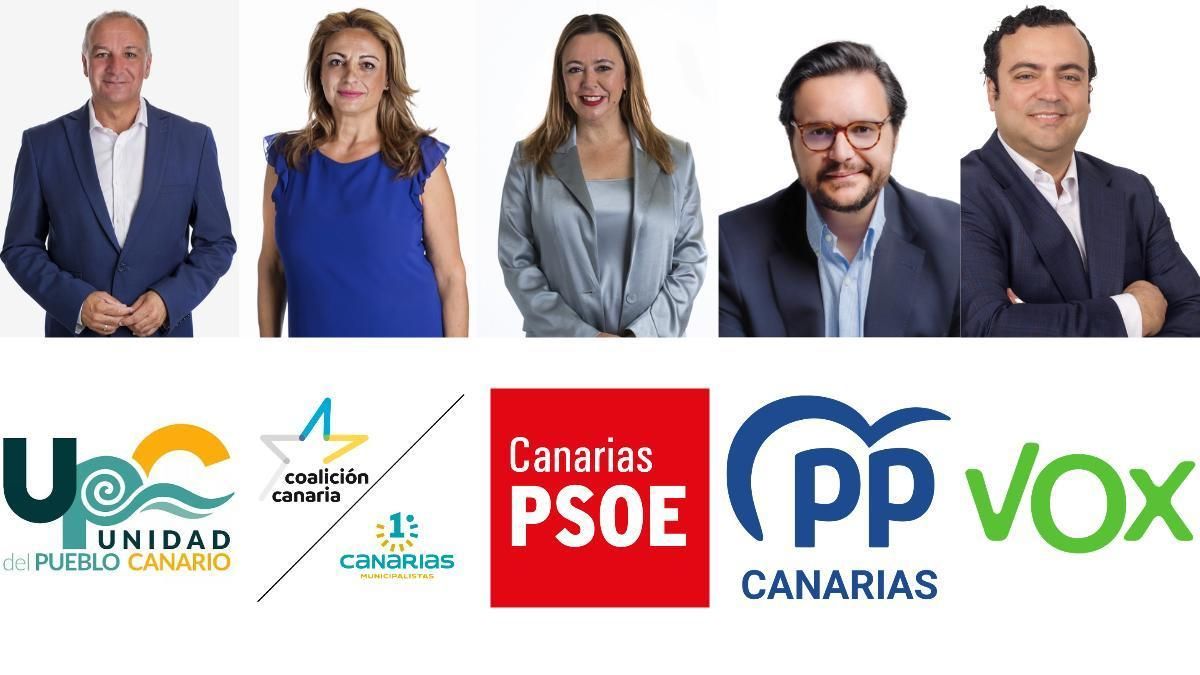
With 33 days to go until Spain’s general elections, political parties in the Canary Islands have submitted their candidacies ahead of the midnight deadline on 26 October. The early elections were triggered by the rejection of housing decrees by Junts, PP, Vox, and UPN. This sets the stage for an electoral campaign that will define the future of Canary representation in Madrid and the country’s policies for the next four years.
The political landscape for the 2026 elections is now clear, with parties registering their candidates for both Congress and the Senate, although their strategies differ significantly. The PSOE was quick off the mark, formalising its lists for the Las Palmas province on the same day the registration opened.
In contrast, the two major coalitions in the archipelago delayed until Monday to announce their candidates. The 1ºCan-CC alliance, made up of Coalición Canaria, Primero Canarias, and 18 municipal groups, along with Unión del Pueblo Canario, which includes Nueva Canarias, Podemos, Sumar, Izquierda Unida, and various social collectives, were among the last to register.
The Popular Party (PP) unexpectedly adjusted its Senate lists in Gran Canaria and Tenerife to include candidates from Vox listed as “independents,” following a strategic agreement between the two parties. Vox has opted not to present its own Senate candidates in order to consolidate the conservative vote in favour of the PP.
Here’s a breakdown of candidates from key parties for the upcoming elections:
PSOE Candidates
Congress:
- Las Palmas: Dolores Corujo, Luc André Diouf, Vanesa Cabrera, Pedro Sosa
- Santa Cruz de Tenerife: José Antonio Valbuena, Marta Arocha, Sergio Matos, Teresa Gutiérrez
Senate:
- Tenerife: Pedro Martín, Alicia Álvarez
- Gran Canaria: Juan Jesús Facundo, Marta Saavedra
- Lanzarote: Francisco Manuel Fajardo
- Fuerteventura: Paloma Hernández
- La Palma: Kilian Sánchez Sanjuán
- La Gomera: Juan Luis Navarro
- El Hierro: Alpidio Armas
PP Candidates
Congress:
- Las Palmas: Sergio Ramos, María Teresa Ortega, Guillermo Mariscal, Clara Mercedes Peña Pérez, Jaziel Martín Arrocha, Olga Palacios Pérez, José Vicente Calero Saavedra, Lorena Martín Cabrera
- Santa Cruz de Tenerife: Gustavo González de Vega, María Noelia González Daza, Borja Pérez Sicilia, Raquel Martín Castro, Adrián Delgado Rodríguez, Damaris Ferraz Martín, Jorge Iván Negrín Méndez
Senate:
- Fuerteventura: Esther Hernández
- Lanzarote: José Francisco Hernández
Vox Candidates
Congress:
- Las Palmas: Alberto Rodríguez, Alejandro Gómez
- Santa Cruz de Tenerife: Sara Daroca (No. 2), Naim Valerio (No. 3)
Senate: Vox will not present its own candidates to back the PP.
New Alliances
One significant development this election is the historic agreement among left-wing parties, forming the Unión del Pueblo Canario, which includes Nueva Canarias, Podemos, Sumar, Izquierda Unida, and various social groups, alongside the Coalition Canaria and Primero Canarias alliance.
Union del Pueblo Canario Candidates
Congress:
- Las Palmas: Luis Campos (Nueva Canarias), Iratxe Serrano (Podemos)
- Santa Cruz de Tenerife: Marisol Collado (Sumar), Francisco Santamaría (Izquierda Unida), Idaira Afonso (Podemos)
Senate: Candidates will be presented jointly across all islands, reflecting a mix of transformative left and progressive municipal profiles.
1ºCan-CC Candidates
Congress:
- Las Palmas: Teodoro Sosa, María Fernández, Juan José Rodríguez, Minerva Alonso, David Monte, Raúl García Brink
- Santa Cruz de Tenerife: Cristina Valido, Jonathan Felipe
Senate: - Gran Canaria: Samuel Henríquez, Elisabeth Santana
- Tenerife: Alfonso Cabello, Patricia León
- Lanzarote: Daisy Villalba, Marci Acuña, Maite Corujo
- Fuerteventura: Nuria Cabrera
- La Palma: Miriam Perestelo
- La Gomera: Víctor Chinea
- El Hierro: Javier Armas (AHI)
Drago Canarias Candidates
This progressive formation is fielding candidates independently, prioritising policies on housing, tourism models, and Canary self-governance.
Congress:
- Santa Cruz de Tenerife: Alberto Rodríguez (party president and former MP)
- Las Palmas: Héctor Morán (party organisation leader)


