


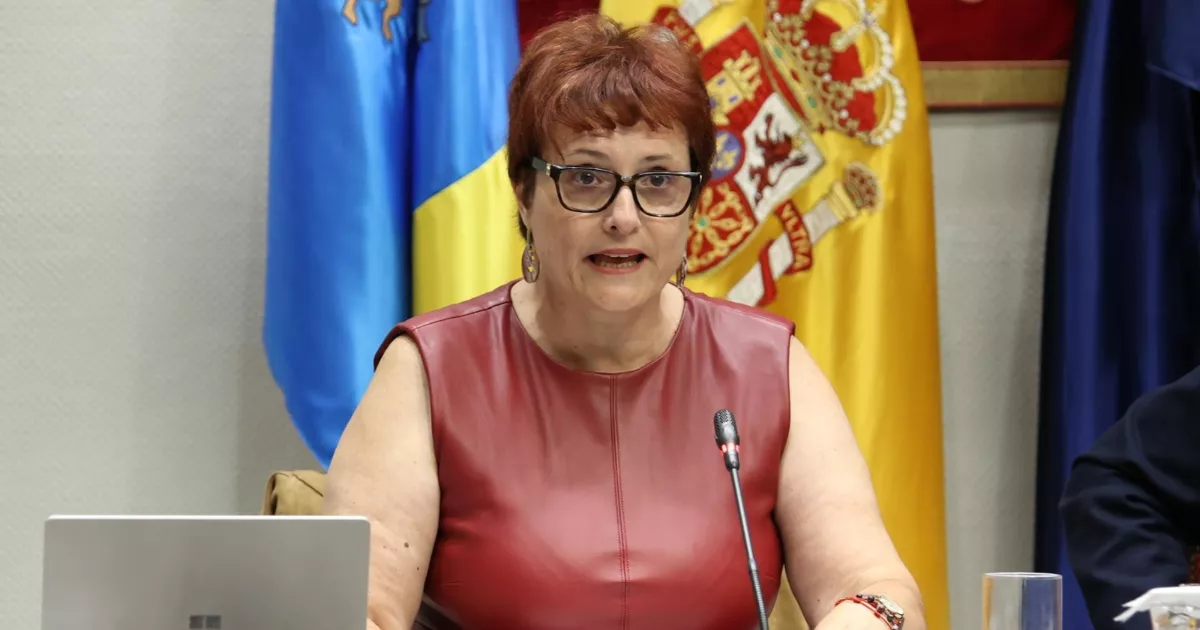
The Canary Islands’ Social Welfare Minister, Candelaria Delgado, presented a £1.035 billion budget for her department in 2027, marking a 23.5% increase—the highest percentage growth in the regional government’s budget. However, opposition parties have raised concerns over cuts to essential programmes.
Delgado highlighted that the department’s budget will increase by £197.24 million compared to 2026, primarily benefiting the Directorate General for Dependency, which will receive an additional £177.65 million, totalling £567.15 million.
She described this as a “new paradigm” for social services in the region, noting that the processing time for dependency claims has dramatically reduced from 782 days in July 2023 to just 184 days by October 2026. Delgado warned that the Canary Islands government would pursue legal action if the Spanish government does not match the regional contribution to dependency funding, as mandated by a new law recently passed in Parliament.
Excluding European funds, Delgado reported a £391 million increase, or 60.9%, in department resources since 2023. She assured that the forthcoming third plan for socio-health infrastructure would secure funding from both the regional government and local councils.
Regarding the Canary Citizen’s Income, £113.33 million has been allocated, including a £400 annual supplement for 43,000 non-contributory pension recipients. Children and Family services will receive £125.52 million, a 20.04% rise, while the Canary Institute for Equality will have a budget of £14.75 million.
Opposition members voiced their dissatisfaction, claiming poverty remains entrenched in the Canary Islands despite economic growth. PSOE spokeswoman Elena Máñez accused the government of freezing the Canary Citizen’s Income and criticized the lack of housing support for 293,000 individuals facing rental payment delays.
Critics pointed out that while state funds have driven increased dependency spending, 12,000 individuals with acknowledged dependency still lack necessary support. Issues were also raised regarding insufficient initial provisions for the socio-health infrastructure plan, as well as cuts to equality policies.
Coalition Canaria’s Miguel Yonathan Martín Fumero expressed support for the government’s commitment to vulnerable groups, while PP’s Isabel Saavedra noted that dependency continues to be a significant challenge despite the budget increase. There were calls from various parties for enhanced coordination and support services, particularly for the elderly and disabled.


