

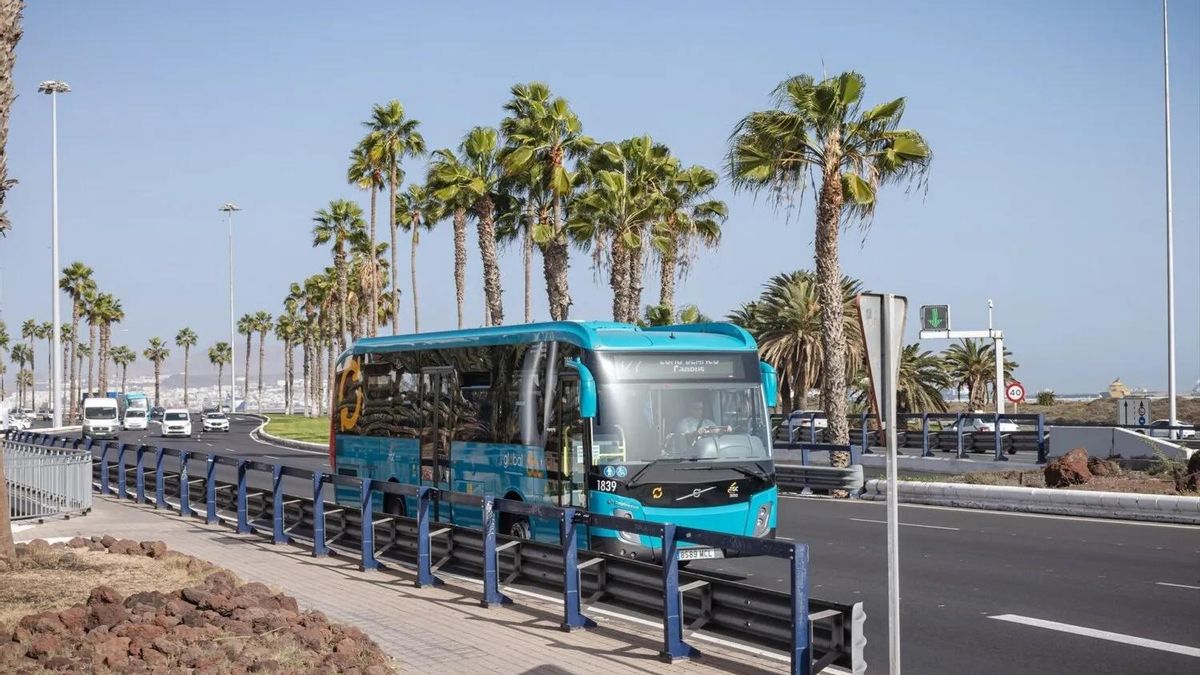
The PSOE party in Palma has proposed a new system for bus access, prioritising residents over tourists. This initiative, announced by Iago Negueruela, the party’s general secretary and mayoral candidate, aims to create separate queues at EMT bus stops. One queue would be for residents holding TIB or Única cards, ensuring they don’t miss out on service during busy periods when demand exceeds capacity.
This model has been successfully implemented in Venice, where local residents can use priority boarding for ACTV transport services.
However, the proposal has met with criticism from the SATI transport union. Secretary General Andrés Rodríguez argues that such measures would burden bus drivers and highlight existing issues with private transport congestion, which needs addressing to improve public bus services.
The debate has arisen in response to overcrowding in Palma, a problem reflected across the Canary Islands. Residents have voiced frustration as tourist-filled buses prevent them from reaching work or school.
According to a 2025 report from Promotur, only 12.6% of tourists use public transport in the Canary Islands, with Gran Canaria seeing a higher rate of 29.32%. Ruymán Santana, manager of Gran Canaria’s Public Transport Authority, described the idea of separate queues as “discriminatory,” citing legal regulations that state all passengers should be allowed to use the service, affirming it as a right for all citizens.
Additionally, Santana questioned how to verify residency for priority access, making the proposal legally complex. He noted that the Gran Canaria airport already has a frequent express bus service, which limits potential users.
Miguel Ángel Rodríguez, director of Guaguas Municipales de Las Palmas, echoed Santana’s concerns, stating that while the issue of tourists is raised in other locations, it hasn’t become a significant problem for local bus operations. He pointed out that implementing separate queues would require new identification checks and logistical changes that need weighing against the anticipated benefits.
The ongoing complaint from residents in tourist-heavy areas of Tenerife and Gran Canaria continues, as they often find buses full and unable to stop during peak times, with hotel workers particularly affected as they struggle to board crowded services.
Overall, Santana emphasised that the issue isn’t solely tourist numbers but the overall capacity of transport services, a problem exacerbated by free public transport policies that have attracted more users, often leaving dedicated passengers without a seat. Some solutions being considered include limiting urban trips on routes aimed at connecting municipalities to ensure seats are reserved for those needing longer journeys.