

Restoring the function and appearance of the mouth after losing multiple teeth is a significant challenge for patients in Tenerife. National statistics highlight the extent of this issue: nearly 44% of Spaniards have experienced tooth loss at some point in their lives, with over half of young adults aged 35 to 44 missing at least one tooth, according to recent Oral Health Surveys. While such diagnoses can feel overwhelming, current technology and surgical techniques provide advanced solutions, even for those with severely affected mouths.
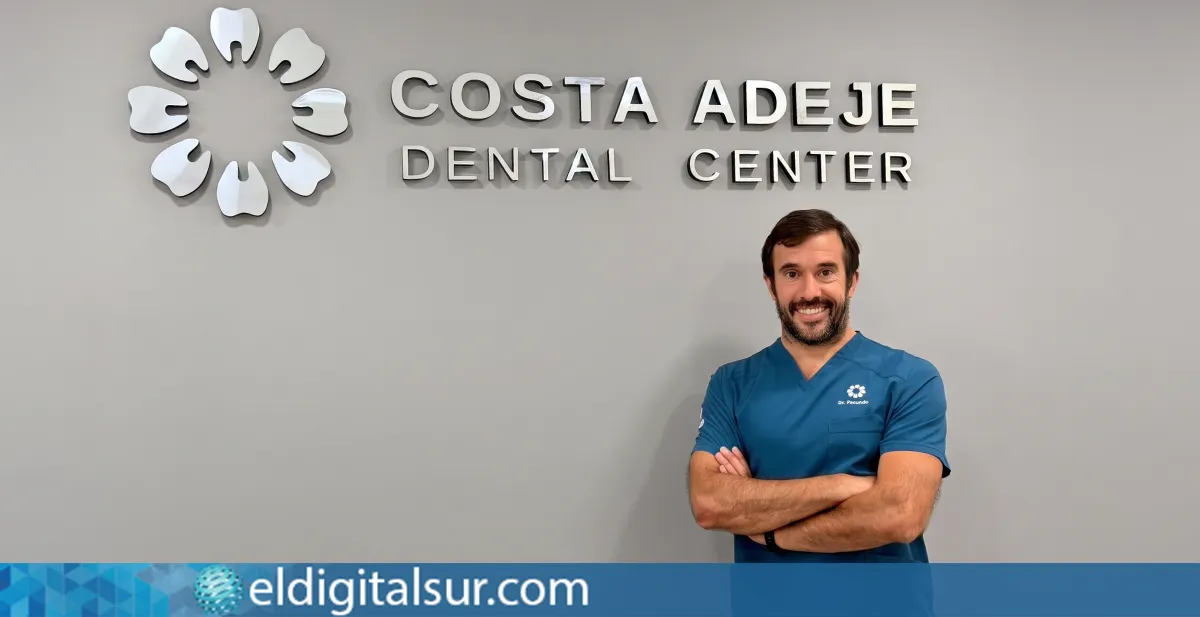
To clarify available options and dispel common misconceptions, we spoke with Dr Facundo Ríos, a dentist specialising in surgery with extensive experience at the Costa Adeje Dental Center, a leading clinic in the island’s south.
When is immediate loading an option?
When patients urgently seek to replace their teeth, “immediate loading” is a frequently discussed medical term. This technique allows for a permanent prosthesis to be fitted on the same day or shortly after implant insertion.
Dr Ríos explains that this procedure is relevant when the initial dental condition presents a clinical challenge. “A patient requesting immediate loading has usually lost the capacity to keep their existing teeth for various reasons,” he says.
This approach is typically used to replace entire rows of teeth—known commonly as All-on-4 or All-on-6, depending on the number of implants used as support. However, a crucial requirement is stability. “The primary dependency of this process is achieving primary stability of the implants,” Dr Ríos notes. This means the implant must be anchored to the bone firmly enough to bear the pressure of the new prosthesis. Multiple interconnected implants help prevent movement, which is vital during the initial healing stages.
Every patient is unique
While achieving immediacy is ideal, Dr Ríos cautions that biological factors play a critical role. Not all treatments are suitable for every individual. He cites the case of Paula, a patient who visited Costa Adeje Dental Center with severe dental deterioration.
Together with the medical team, they chose a highly stable solution: a hybrid prosthesis on six implants in both dental arches. The procedure progressed quickly in her lower jaw, allowing for immediate loading. However, her upper jaw posed a common anatomical challenge: a lack of bone.
“Due to the need to enhance the bone in the upper part, we opted for a sinus lift procedure,” the specialist explains. This intervention creates a solid bone base where none existed.
This technical factor necessitated a change in the timeline. “We had to rule out immediate loading on the implants placed in regenerated areas, as this would overload the early healing stages for both the bone and the implant,” Dr Ríos clarifies. The experts’ solution was to adopt a conservative approach: perform the bone elevations, allow time for healing, then place the implants followed by loading.
This case illustrates that different timelines can coexist within the same patient. Dr Ríos emphasises the aim of specialists is to “find what the patient needs and wants and to provide a solution from a technical standpoint, utilising current options in dentistry.”
When can a post-extraction implant be placed?
A common concern among patients is whether it is feasible to remove an irreparable tooth and immediately place a replacement implant.
Dr Ríos confirms this option is viable, but only under strict conditions. The procedure can be performed “as long as there is sufficient support to keep the implant stable initially; primary stability is crucial for the healing process.”
However, it is more complicated than merely filling a gap. When a natural tooth is extracted, the remaining space (the alveolus) doesn’t always perfectly match the size of the cylindrical implant. “If we extract a tooth and find significant space between the socket and the implant, we might need to fill that with some material,” he warns. Yet he adds, “If we give the body time, it will heal just as well or even better than if we force it with biomaterials.” Therefore, he insists on a meticulous analysis for each extraction to determine the safest approach.
The common myth: “Implants last a lifetime”
Dr Ríos is quick to dispel the misconception that implants are indestructible. “The myth is that implants are for life,” he states firmly. “Implants are a last resort for replacing lost teeth, but they can also fail if not properly maintained.”
While titanium does not decay, the living tissues surrounding it—gums and bone—are susceptible to bacteria, potentially causing peri-implant diseases that lead to implant loss.
The vital importance of maintenance
This technical reality leads to an essential warning from the specialist: surgery is only half of the success. “Placing implants is not the same as maintaining them,” he reflects. “The most complex aspect is maintenance.”
The mouth is described by Dr Ríos as “tremendously septic,” teeming with natural bacteria. Introducing an external component requires careful precautions. To ensure long-term viability, he stresses the need for a true “communion between the clinic and the patient.”
This means regular check-ups at the dental centre and a strong commitment at home. “Patients should not assume that having implants means they can neglect brushing their teeth,” he cautions. “These implants require specific care that we must instruct and motivate the patient to maintain.”
In summary, restoring functionality and aesthetics in complex dental cases is more feasible today, thanks to the expertise of specialists like those at Costa Adeje Dental Center. Nonetheless, advanced technology and surgical methods must always respect biological times and maintain strict hygiene practices. For those facing tooth loss and seeking tailored diagnostics, further details about these surgical procedures can be found and direct contact with the experts is available via their official website: https://dentalcostaadeje.com/