


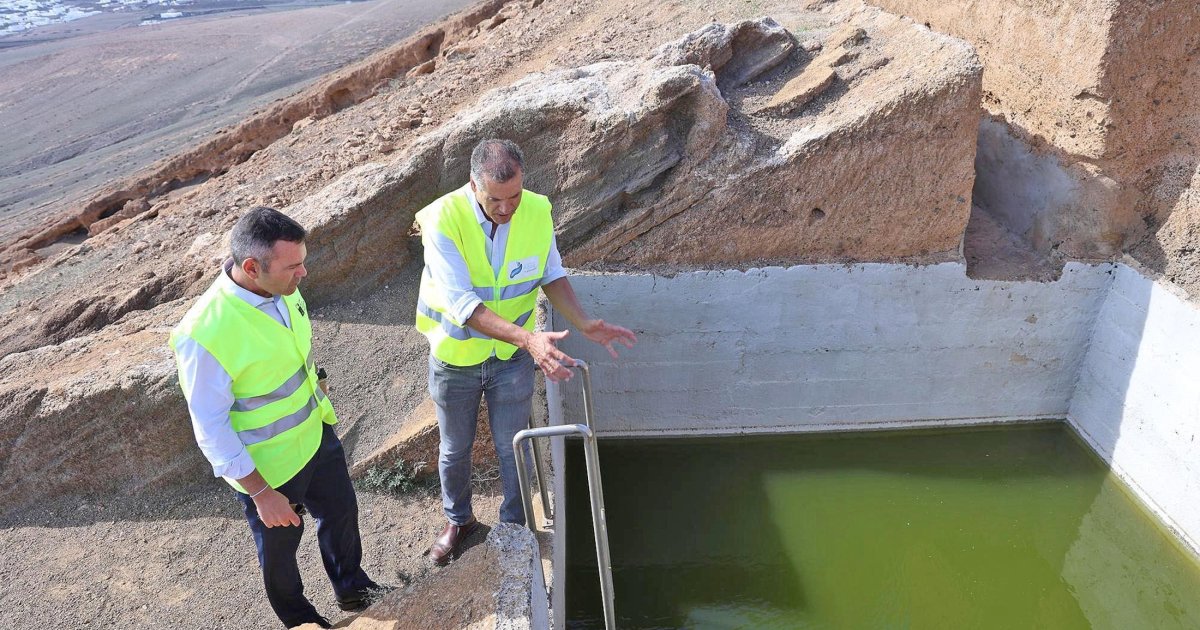
The Lanzarote Island Water Council has completed restoration work on the external channels of the Maretas de Montaña Blanca in Tías. This infrastructure, with origins dating back to the 1940s, plays a vital role in Lanzarote’s water management.
Historically, these channels were constructed in 1945 to capture rainwater runoff. This hydraulic system, which includes collection channels and storage tanks, represents the hard work of past generations to ensure water resources on an island known for its scarcity.
Before desalination changed the island’s water supply, capturing rain required a deep understanding of the land’s contours to direct water into storage. In Montaña Blanca, channels carved into the hillside guided rainwater to settle before entering the cistern. The flow continued to two internal tanks.
Oswaldo Betancort, president of the Cabildo and the Water Council, remarked, “The Maretas show how Lanzarote learned to make the most of rainfall in a place where every drop mattered. Restoring the channels helps preserve this memory.”
Over time, sediment and vegetation had blocked the channels, causing water to erode the slopes and flood lower-lying areas. The recent project cleared the debris, allowing rainwater to follow its intended course.
The work, funded by the Water Council and carried out by local contractor Transportes y Excavaciones Sccatmeca, included sediment removal, repair of the channel walls, and waterproofing. Most of the work was done manually to protect the surrounding land, along with improving access paths and cleaning out drainage systems.
Domingo Cejas, Lanzarote’s Water Councillor, emphasised the significance of acknowledging historical engineering efforts that aimed to optimise rainwater for domestic and agricultural use. He highlighted the pioneering nature of Lanzarote and La Graciosa in finding alternative hydraulic solutions to water shortages.
With the restoration, the channels will function as intended, directing rainwater from the hillside to the reservoirs. This work not only enhances rainwater management but also preserves an essential part of Lanzarote’s hydraulic heritage and historical memory.


