


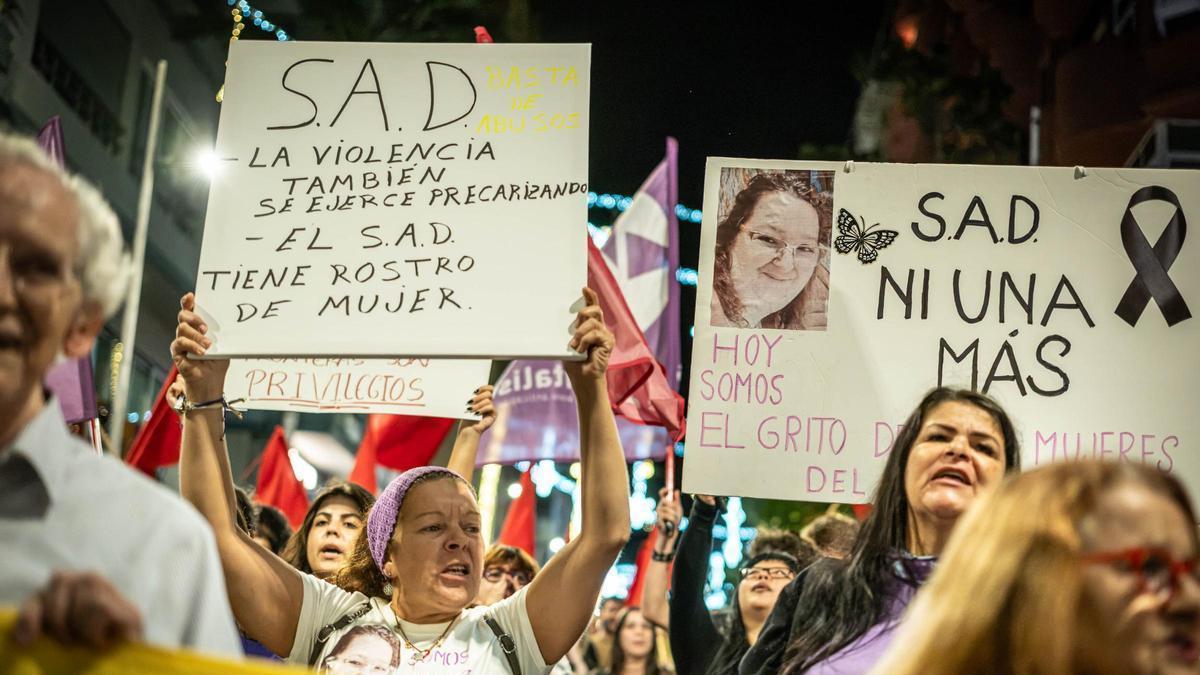
A vibrant protest against gender violence filled the streets of Santa Cruz de Tenerife on 25 November, coinciding with the International Day for the Elimination of Violence Against Women. Under the banner “Standing up against patriarchal violence. We won’t be silenced,” hundreds gathered armed with banners and megaphones, chanting “We are not afraid, but we are angry.”
Light rain failed to dampen enthusiasm as participants marched from Parque García Sanabria to Plaza Candelaria. The spirit of protest was palpable throughout the city, with streets adorned in violet, the movement’s colour, as people made their way to the demonstration. While attendance was substantial, it was notably lower than in 2018 and 2019, years that saw a surge in participation.
As the clock struck 19:00, the crowd began to unite and chant. Among the demonstrators was Laura Guirao, a member of a feminist organisation who assists gender violence victims daily. She highlighted the significant number of women seeking help, saying her organisation supports over 300 women annually in Tenerife.
Guirao stressed the urgency for ongoing activism, especially with elections looming, calling for louder voices against regressions in women’s rights. “We must take to the streets to disturb and make noise,” she urged.
Elisa Pérez from the Forum Against Gender Violence said this year’s protest was critical due to rising ultra-conservative sentiments threatening recent progress in women’s rights. The call to action was met with a strong turnout, reflecting the community’s commitment to combating gender-based violence.
Young activist Iris Tapia expressed concern about denialism among youths regarding gender rights, sharing alarming stories from her younger sister about unacceptable behaviour in schools. Margot González added that as a mother, she strives to instil equality in her daughter, stressing the long-standing oppression faced by women.
Diana Carolina Borges, a migrant from Colombia, noted the vulnerability of women in precarious situations, indicating that while domestic feminicide rates may differ, much work is still needed to address the issue.
As the purple wave rolled through Santa Cruz, it gathered support from a diverse crowd, including families and political figures such as Luis Yeray Gutiérrez, the Mayor of San Cristóbal de La Laguna. Resident Benito López attended annually to show his solidarity, stating, “It’s a civic duty to be here.”
At Plaza Candelaria, the organisers, speaking for those who couldn’t attend, made a resolute statement against femicide and sexual violence. The day underscored the unity of the movement, highlighting economic violence as a crucial issue often overlooked, particularly affecting women living with their abusers.
As a powerful message of solidarity concluded the event, speakers affirmed that they would continue to fight for a more equitable world, rallying against those who aim to silence them.
Additionally, protests occurred across Spain, with the Cabildo de Tenerife condemning sexual harassment in social spaces. The regional government focused on micro-machismo and the trivialisation of women’s violence, particularly online. The Universidad de La Laguna displayed messages of protest penned by students, while moments of silence were observed in remembrance of the 116 women killed in the Canary Islands since 2003.


