


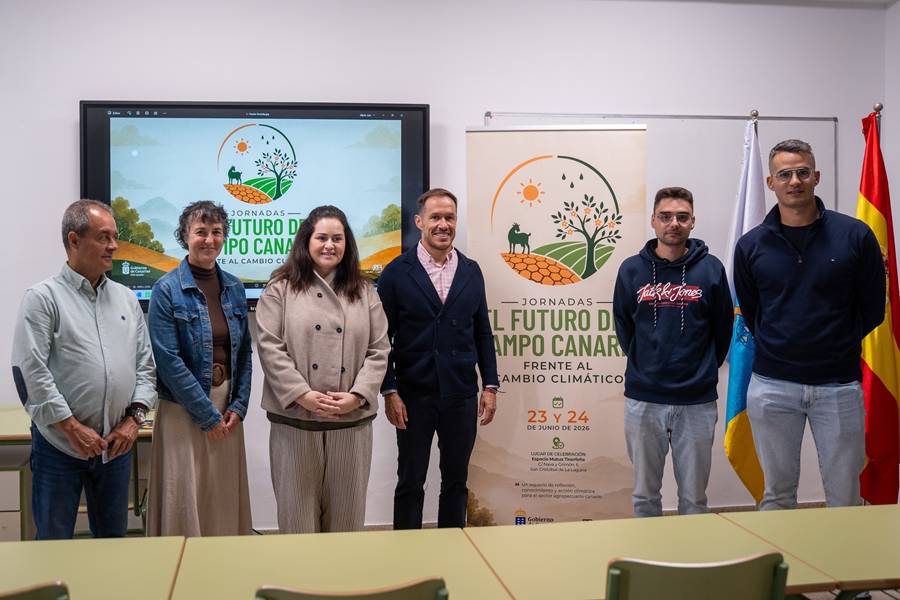
La Palma hosted the final session of the “Future of Canary Agriculture in the Face of Climate Change” on Friday, aimed at equipping the primary sector with essential technical and scientific knowledge to tackle climate-related challenges.
Organised by the Canary Islands’ Department of Ecological Transition and Energy, this last of four sessions took place at the Agricultural Training School in Los Llanos de Aridane. The event brought together agricultural professionals, technical staff, and representatives from the agro-industry interested in learning about key findings and adaptation measures to enhance the resilience of agricultural and livestock activities in the region.
Councillor Mariano H. Zapata noted that the meeting facilitated the exchange of experiences among professionals and experts, helping to identify common challenges and share proposals for improving the sector’s response to climate-related phenomena.
Zapata emphasised the need for the agro-industry to adapt to climate change and commended the relentless efforts of agricultural professionals. “Concluding this series of sessions in La Palma carries special significance, as the primary sector here has continually shown a remarkable ability to overcome and adapt to its environmental challenges,” he stated. He assured that the Canary Islands government would continue to collaborate with the sector to provide practical tools for the future of agriculture and livestock amidst emerging climatic realities.
Throughout the morning, various tools for analysing and evaluating climate risks were presented, along with practical adaptation examples relevant to the Canarian primary sector. Topics included agricultural risk bioindicators, the adaptation of crops and livestock to new climate scenarios, thermal stress, and best practices aimed at reducing vulnerability in agro-activities.
A working group at the end of the session gathered input and reflections from participants on the primary sector’s adaptation needs, reinforcing the initiative’s participatory nature designed to incorporate knowledge and experience from those directly involved in the region.
This session concluded a series of meetings initiated by the Department of Ecological Transition and Energy, which began on 30 October in Tenerife, followed by events in Lanzarote on 13 November and Gran Canaria on 16 November.
These sessions discussed the impact of climate change on strategic crops for the Canary Islands, such as bananas, avocados, mangoes, and vines, as well as livestock and beekeeping. They also served as a platform for professionals to share experiences and suggest adaptation measures tailored to the unique needs of each island.


