


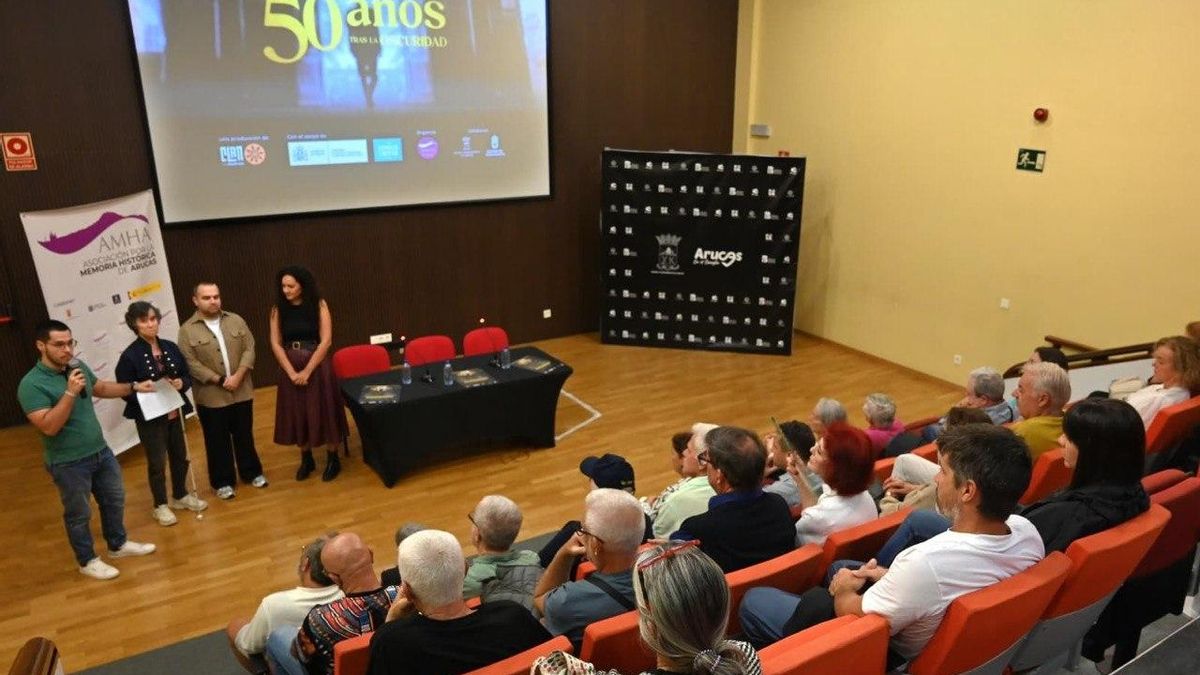
The Arucas Historical Memory Association is screening episodes of the documentary “Canarias: 50 Years After the Darkness” at the Municipal Cultural Centre. The second chapter, titled “The Repression,” highlights the effects of the 1936 coup, the Civil War, and Franco’s brutal regime in the Canary Islands.
Pino Sosa, the association’s president, urged attendees to remember the past, asking them to consult their grandparents and read about the historical events. At the event, she was joined by Arucas’ Culture Councillor Carlos González, AMHA volunteer Eduardo Hernández, and journalist Jennifer Jiménez.
The documentary, produced by Clan de Medios, features prominent historians and voices from the ongoing fight for historical remembrance, including Sosa and families still searching for lost relatives.
The episode discusses how workers, union members, women, teachers, and the LGBTQ+ community were particularly targeted during this repression. Its screening attracted significant interest, with many expressing the need for ongoing public discourse about democratic memory.
In the subsequent discussion, Sosa, Hernández, and Jiménez stressed the importance of safeguarding fundamental rights, cautioning against taking them for granted. Hernández emphasised that democracy goes beyond voting; it requires respect for political pluralism and the effective protection of rights.
Jiménez echoed this sentiment, remarking on the failure to learn from history, citing ongoing conflicts and current atrocities in Palestine. She highlighted the dangers of spreading misinformation, a tactic used by the Franco regime during years of fear and silence.
The panel further underscored the importance of press freedom and the public’s right to information in any lawful state. Hernández questioned whether international consensus post-World War II is fracturing, particularly concerning the use of force, with Jiménez affirming that it appears to be.
The documentary also showcased personal stories revealing the impact of civil war and repression in the Canaries, including accounts from María Jesús Dámaco and Elina Bencomo Ascanio about her aunt, Blanca Ascanio.
The next screening will take place on 20 November at 7:00 PM, featuring the third chapter titled “The Reparation,” which will include stories from Pino Sosa and other significant figures involved in the memory recovery movement.


