


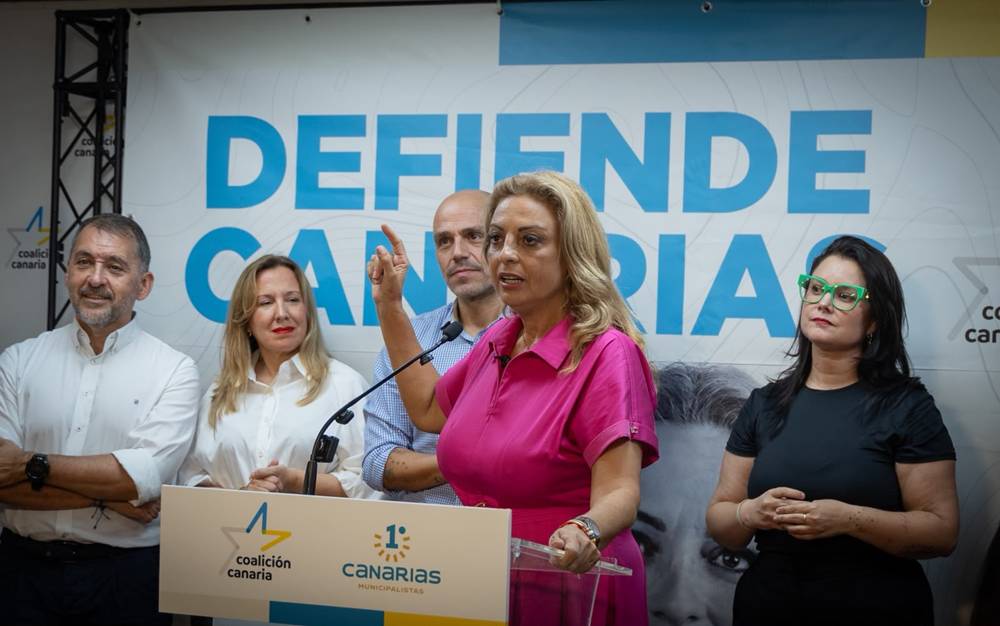
Coalición Canaria (CC) aims to capitalise on widespread voter dissatisfaction with political polarisation to increase its presence in the Spanish Congress. The party’s lead candidate, Cristina Valido, stated it is prepared to support either Pedro Sánchez or Alberto Núñez Feijóo in a potential investiture vote, provided they commit to the “Canary Agenda,” which addresses local concerns.
In an interview, Valido highlighted that CC is open to negotiating with any candidate needing their support, including Feijóo, despite potential deals he may strike with Vox. She emphasised that any agreement must address issues specifically affecting the Canary Islands.
In the upcoming elections, CC seeks to broaden its electoral base through a partnership with Primero Canarias, a party set up by prominent Gran Canaria mayors who previously left Nueva Canaria. CC is facing competition from multiple nationalist factions, as they navigate a divided political landscape.
Valido expressed optimism that combining forces with Primero Canarias will strengthen CC’s representation, recalling a time when the party held four seats in Congress between 1993 and 2004. She aims to attract all Canary Islanders, particularly those disillusioned by major parties, whose local representatives she feels are influenced by directives from Madrid.
Reflecting on her legislative accomplishments, Valido defended agreements made with Sánchez’s government, asserting that failing to do so would have harmed the islands. She noted successes such as reforms in immigration law and maintaining free public transport, but lamented the lack of state budget proposals that hinder development in key infrastructure areas.
CC intends to tackle housing issues by limiting home purchases to residents of the Canary Islands, in light of 25% of homes sold last year going to non-residents. Valido believes solving the housing crisis requires increasing property availability and streamlining planning processes.
On tourism, she argued that the islands must control visitor numbers, advocating for a specific carrying capacity for each island, particularly in southern Tenerife and Gran Canaria, which have reached growth limits. Valido acknowledged the uneven benefits of tourism and the troubling poverty rates that persist despite some improvements.
Regarding vacation rentals, she welcomed the government’s regulations that have reduced the number of homes used for this purpose by 5,000 since their implementation. On immigration, Valido called for greater involvement from the Spanish state and the EU to manage arrivals and prevent public service overloads.
She also stressed the need for enhanced maritime surveillance and security personnel in the Canary Islands to better control migrant boats. For El Hierro, a key entry point for migrant vessels, she suggested establishing medical facilities at La Restinga port and a field hospital to alleviate pressures on existing healthcare services.
In the economic sphere, Valido advocated for the effective application of the Economic and Fiscal Regime (REF) in state laws, emphasising the need for a regional financing model that considers the unique circumstances of the Canary Islands.


