

New Transport Strategy for Tenerife’s Southern Region Unveiled
A draft of the Sustainable and Intelligent Mobility Strategy for the Canary Islands has been released, focusing on transforming transport in southern Tenerife, a region bustling with demographic, tourism, and logistical activity.
Developed by the Ministry of Public Works and the Deputy Ministry of Infrastructure, the document outlines the current transportation landscape and sets a 30-year strategic planning roadmap.
Key initiatives include reassessing the previously shelved Fonsalía port project, evaluating the potential for a second runway at Tenerife South Airport, and establishing a future train line. Additionally, plans for BUS-VAO lanes on the TF-1, reorganising Los Cristianos, and new ferry routes to Gran Canaria are also proposed. These projects vary in development stage and will guide future regional infrastructure policy aimed at improving mobility.
The analysis reveals that daily travel in the south is notably higher than anticipated. Municipalities like Santiago del Teide (62%), San Miguel de Abona (57%), and Guía de Isora (48%) have high levels of inter-municipal travel. This heavy flow contributes to congestion on the TF-1, which experiences over 50,000 vehicles daily, notably on the San Isidro-Las Américas stretch, described as one of the most congested corridors.
Los Cristianos Port
The report identifies Los Cristianos port as the main maritime connection to the Green Islands (La Gomera, El Hierro, and La Palma), noting it handles more inter-island passenger traffic than any other port in the archipelago. However, its single terrestrial access from the TF-1 via La Habana, Chayofita, and Juan Carlos I avenues creates a bottleneck that worsens during peak demand.
The strategy emphasises the need to improve access, reorganise port traffic flow, establish dedicated access lanes from the TF-1, create park-and-ride facilities, and implement smart systems for real-time traffic updates and ferry wait times.
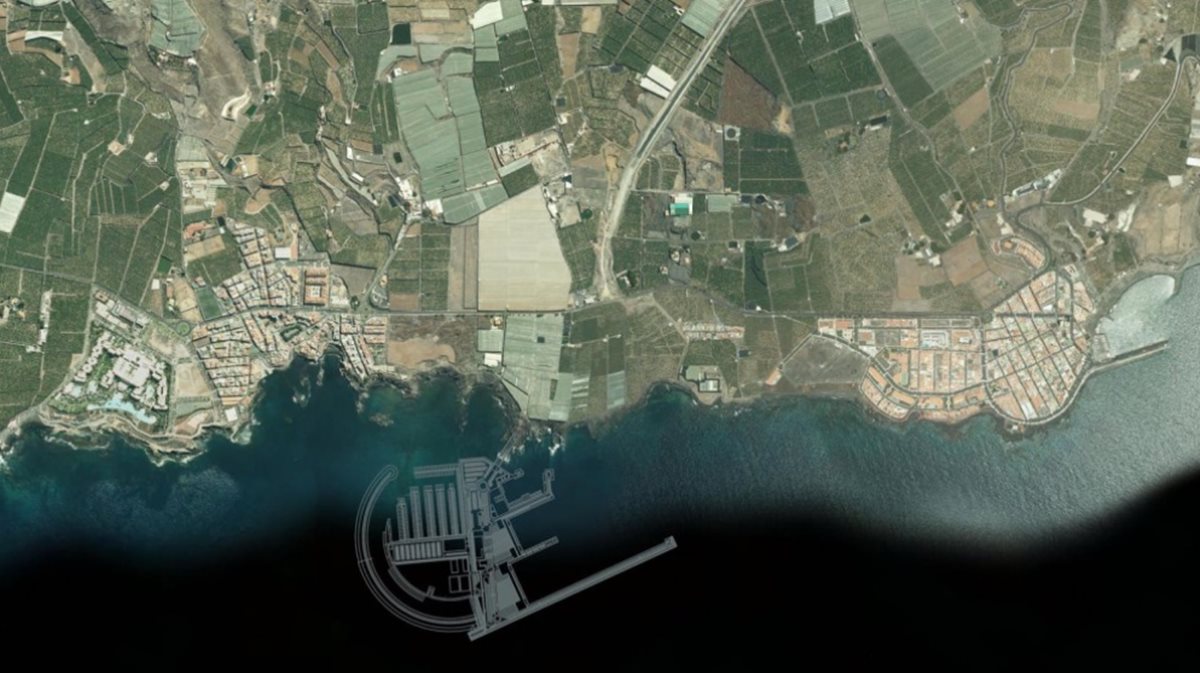
Parallel to this, the government has revived the Fonsalía port project, initially proposed for Guía de Isora’s coastline, which aimed to create five docking lines for ships, a fishing dock, and 467 berths. The project faced opposition from environmental groups and has been under consideration for 25 years.
Fonsalía is mentioned in several scenarios within the new strategy, citing its proximity to the western islands as a key advantage that could reduce travel time and enhance safety against adverse weather.
Long-term Outlook
However, Fonsalía is not expected to be immediately developed. Its construction would require a new environmental assessment due to its location within a Special Conservation Area, along with a specific port development plan and coordination with Tenerife’s territorial planning. The timeline suggests it could take 10 to 15 years from the preliminary studies to potential operation.
The project’s re-inclusion marks a shift from earlier political positions, as the Canary Islands Parliament previously voted to abandon it in 2021 with support from multiple political groups.
Tenerife South Airport, another significant hub, is also considered for a second runway of about 3,200 metres.
Future Rail Connections
In the meantime, a middle-ground solution for road congestion involves implementing BUS-VAO lanes on the TF-1 between San Isidro and Los Cristianos, and also from Santa Cruz to Güímar, aiming to prioritise public transport.
Among the major developments, the proposal for a southern railway corridor of approximately 79.7 kilometres connecting Santa Cruz to the tourist areas in the south, including stations at San Isidro, the airport, Los Cristianos, and Costa Adeje, is highlighted.
The plan even suggests a possible extension to the proposed Fonsalía port, linking it to the railway network.
While Arona and Adeje will drive tourist mobility, Granadilla de Abona is positioned to handle industrial and energy-related transport, though it is still in the process of developing its cargo traffic capabilities and does not currently serve as a passenger port.