


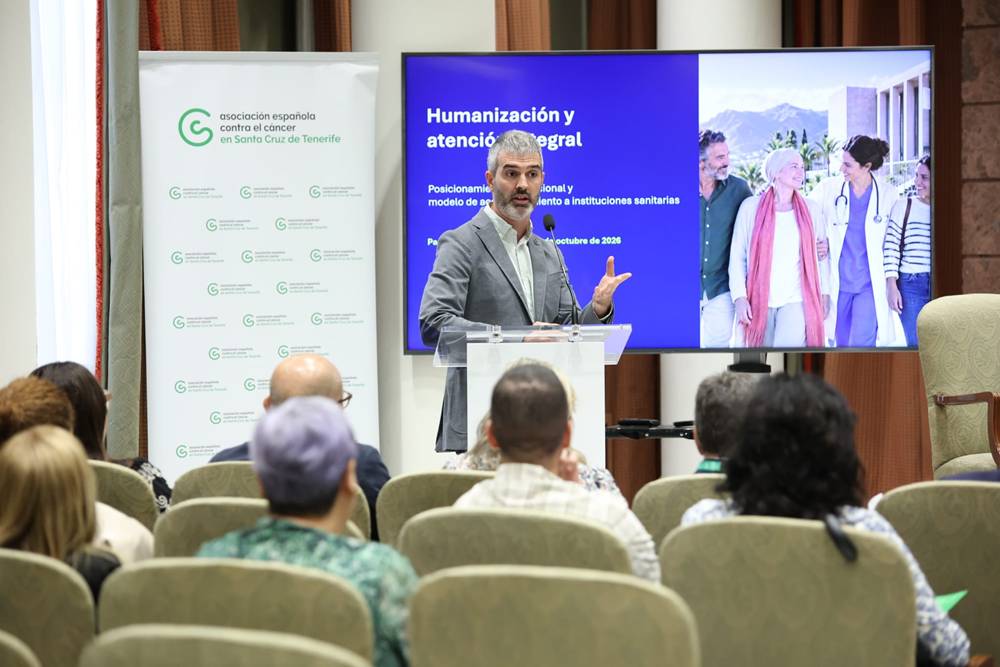
The Canaries Parliament hosted the ‘Humanisation and Cancer in the Canaries’ event on Thursday, organised by the Spanish Association Against Cancer (AECC). The initiative aimed to emphasise the importance of placing cancer patients and their families at the heart of care, promoting closer, more humane, and comprehensive support.
The event brought together institutional representatives, healthcare and social professionals, third-sector organisations, patients, and community members for a dialogue aimed at improving oncology care and support.
Vice-President of the Canaries Parliament, Gustavo Matos; Director-General of Patient and Chronic Care for the Canaries Government, Rita Tristancho Ajamil; and provincial AECC presidents in Santa Cruz de Tenerife and Las Palmas, Andrés Orozco and Pedro Lara, respectively, presided over the discussions.
Throughout the event, the focus was on humanisation as a key component of oncology care, highlighting not only treatments and medical advancements but also the emotional, social, and personal needs of those living with cancer and their families.
A significant discussion point was a roundtable on humanisation initiatives that featured patients and professionals, including a psychologist and an oncologist. This exchange allowed participants to share insights on delivering care that addresses all aspects of a person’s life.
The discussions underscored the necessity of strengthening cooperation among institutions, the healthcare system, associations, and patients themselves to develop care models more attuned to individual circumstances, which encourage active listening, support, and patient involvement in decisions related to their treatment journey.


