


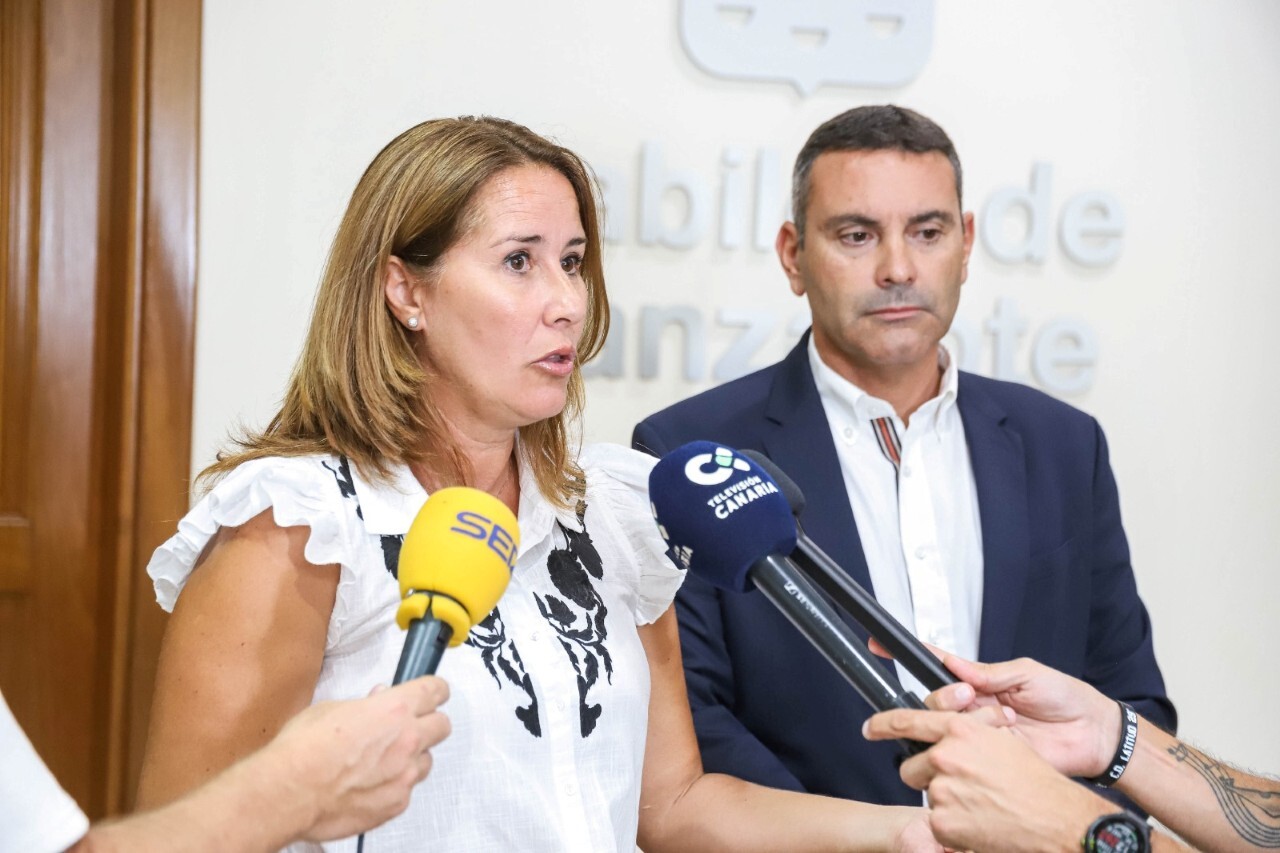
The Fuerteventura Island Council has rebuffed comments from the Canary Islands Minister for Ecological Transition and Energy, Mariano Hernández Zapata, regarding the power outage that affected Lanzarote and La Graciosa on 3 October. Council President Lola García has urged Zapata to clarify the reasons behind the incident, insisting that each island must make equivalent efforts to ensure its energy supply.
García stated, “If Lanzarote requires emergency support, the Government should provide it there. Likewise, if Fuerteventura needs assistance, it should be allocated here to meet our needs. Sharing an electrical system does not grant the right to treat our island as a resource to solve other islands’ issues.”
The statement follows Zapata’s remarks in the Canary Parliament where he attributed the outage to a fault at the Mácher substation, while highlighting Fuerteventura’s generation deficit as a vulnerability in the shared electrical system. He noted that Playa Blanca maintained power due to its connection with Fuerteventura, prompting the Cabildo to demand the release of reports from Red Eléctrica and Endesa. This would clarify what could have happened to Fuerteventura had the fault not electrically isolated the islands.
The council pointed out that the Canary Government has presented two temporary plants being installed by Sampol and DISA in La Herradura, Puerto del Rosario, to address Fuerteventura’s generation shortage. They are calling on the regional government to clarify the conditions under which these units will be activated and to urgently arrange the installation of emergency generators for Lanzarote.
The councillor for Territorial Planning, Nereida Calero, expressed concern over the government’s use of Article 6 bis to authorise energy installations without considering local planning or concerns. “We have repeatedly asked the government to respect local plans and consult with us before determining the location of these projects. Each decision impacts the land. Fuerteventura has the right to control its territory,” she said.
Calero also stressed that renewable energy initiatives must include storage capacity. “These installations have been approved without requiring energy storage systems. We must maximise the use of existing energy before encroaching on more land. This involves adding storage, promoting self-consumption, and improving energy efficiency.”
García further highlighted the need to modernise outdated electrical infrastructure across several islands, urging the government to expedite the renewal of equipment and networks. The Cabildo insists on including a substation in Zurita to facilitate the relocation of the El Charco thermal power plant while opposing any electrical link with Gran Canaria. She requested detailed proposals from the Transition Ecological Ministry regarding Fuerteventura’s needs.
“We want a secure energy supply for Fuerteventura and all islands. This requires modernising outdated systems and reinforcing each island where necessary. Fuerteventura should not sacrifice its territory to make up for others’ deficiencies. We are no longer the ‘Cinderella’ of the Canaries,” García concluded.
The October 3 outage began at 5:44 AM due to an incident at the Mácher substation, initially leaving around 51,700 customers without power. A subsequent incident in San Bartolomé and Punta Grande increased this number to approximately 73,600, according to reports from the Canary Government’s emergency services. On November 10, Zapata informed the Parliament that his department was still reviewing reports to ascertain if the outage could have been avoided.
The temporary plants at La Herradura will provide a total capacity of 33 megawatts—18 from Sampol and 15 from DISA. Meanwhile, a second state electricity generation tender proposed in July aims for a firm capacity of 95 megawatts for the Lanzarote-Fuerteventura system to meet future demand by 2031.


